Pacific Atrocities Education
  • Home
    • Host a Fundraiser for Pacific Atrocities Education
    • About >
      • FAQ's - Frequently Asked Questions
    • Support Us >
      • Projects you can support! >
        • Distributing Books
        • Presenting at 112th Annual Meeting of Pacific Coast Branch
        • Summer Research Relocation Fund
    • Contact
  • Stories
    • James Bradley on Pacific Front Untold
    • Videos >
      • Black Hearts (2021)
    • Blog
  • Internship
    • Summer 2026 Internship
    • Fall 2025 Internship
    • Summer 2025 Internship
    • Spring 2025 Internship
    • Summer 2024 Internship
    • Summer 2023 Internship
    • Fall 2022 Internship
    • Summer 2022 Internship
    • Summer 2021 Internship
    • Fall 2020- Spring 2021 Internship
    • Summer 2020 Internship
    • Fall 2019 Internship
    • Summer 2019 Internship >
      • Public History Night
    • School Year 2018-2019 Internship
    • Summer 2018 Internship >
      • 2018 Summer Showcase + Fundraiser
    • Fall 2017 Internship
    • Summer 2017 Internship >
      • 2017 Summer Showcase & Fundraiser
  • Books
  • Archives
  • Resource Page
    • Supplementary Research Guides >
      • Unit 731 - Guide >
        • Background of Biochemical Warfare Development
        • Imperial Japan's Chemical Warfare Development Program
        • Map of Unit 731
        • Personnel of Unit 731
        • Duties of Unit 731
        • Human Experimentation
        • [GRAPHIC] Germ Warfare Attacks
        • Cover Ups After the War
        • [OLD] Cover Ups After the War
      • Philippines' Resistance - Guide >
        • Philippines World War II Timeline
        • The Japanese Invasion & Conquest of the Philippines
        • Bataan Death March
        • Formation of Underground Philippines Resistance
        • Supplies of the Guerrilla Fighters
        • The Hukbalahap
        • Hunter's ROTC
        • Marking's Guerrillas
        • United States Army Forces in the Philippines of Northern Luzon (USAFIP-NL)
        • The Aetas
        • Chinese and Filipino-Chinese Nationalist Guerrilla Units
        • The Female Faces of the Philippine Guerrillas
      • Rising Sun Flag - Guide >
        • History of the Rising Sun Flag
        • Atrocities Committed Under the Flag
        • Rising Sun Flag in Pop Culture
      • Pinay Guerrilleras - Guide >
        • Japanese Occupation of the Philippine Islands: Pinays Answering the Call to Arms
        • The Fierce Heneralas and Kumanders of the Hukbalahap Guerrillas
        • Amazons of the Pacific Theater
        • Filipina American Veterans: Recovering the Extraordinary Feats of the Ordinary Pinays
        • The Legacy of the Asian Women Soldier
      • Fall of Singapore - Guide >
        • Singapore World War II Timeline
        • History of World War II in the Pacific
        • History of Singapore
        • Japan's Conquest in Asia
        • Japan's Invasion of the Malay Peninsula
        • Sook Ching Massacre
        • Double Tenth Incident
        • Social Changes and Challenges in Singapore
        • Voices from Syonan
        • Return to British Rule
      • Three Years and Eight Months - Guide >
        • Hong Kong before WW2
        • Buildup to World War 2
        • The Battle of Hong Kong
        • Life during 3 Years and 8 Months
        • East River Column Guerrilla Fighters
        • Prisoners of War Camps
        • End of Japanese Occupation
        • War Crimes Trials
      • Siamese Sovereignty - Guide >
        • The Land of Smiles
        • The Thai-Japanese Relationship
        • Phibun’s Domestic and International Policies
        • The Free Thai Resistance Movement
        • Post WW2 Aftermath of Thailand
      • The Khabarovsk War Crimes Trial - Guide >
        • Defendants of Khabarovsk War Crime
        • The Japanese Empire and USSR in WW2
        • The Employment of the Bacteriological Weapon in the War
        • Planning of Japan invasion to USSR
      • Unit 731 Cover-up : The Operation Paperclip of the East - Guide >
        • Establishing Manchukuo
        • The Development of Unit 731
        • Plan Kantokuen and Bacteriological Warfare
        • The Downfall of the Japanese WW2 Era
        • Three Stages of Interrogations
        • Lasting Impacts
      • Marutas of Unit 731 - Guide >
        • How did Ishii Shiro start unit 731?
        • A Beta Testing Site
        • Establishing Pingfan
        • Experiences at the Human Experimentation Complex
        • Vivisection at the Unit 731
        • Anta Testing Grounds
        • Overall Advance from the Laboratory Creations
        • The End of the War
      • Prince Konoe Memoir - Guide >
        • Who is Prince Konoe?
        • Preparation to Tripartite Pact
        • Emperor Hirohito and Prince Konoe
        • The End of Prince Konoe
      • Competing Empires in Burma - Guide >
        • What was the China-Burma-India Theater?
        • When did the China-Burma-India Theater Happen?
        • Who Fought in the China-Burma-India Theater?
        • The Second Sino Japanese War
        • Japan in the South
        • Operation U-Go
      • Battle of Shanghai - Guide >
        • The Battle of Shanghai. Background
        • Shanghai Before War
        • The First Battle of Shanghai 1932
        • Battle of Shanghai 1937
        • Aftermath of Battle for Shanghai
      • Ishi Shiro - Guide >
        • History of Biological Weapons and The Young Ishii Shiro
        • Establishment in Manchuria
        • Pingfang District - Harbin
        • Failures and Corruption
        • Post War
      • Taiwan The Israel of the East - Guide >
        • Background of Formosa
        • Industrialization of Japan
        • China During WWII
        • Taiwan under Kuomintang
        • New Taiwanese National Identity
      • Seeking Justice for Biological Warfare Victims of Unit 731 - Guide >
        • Introduction of Wang Xuan
        • Colonel Memorandum
        • The Beginning of Biological Warfare
        • The Bacteriological Warfare on China
        • Victims in Zhejiang’s Testimonies
        • After the War
      • Rice and Revolution - Guide >
        • The French Colonial Period
        • Anti-Colonial Resistance
        • The Rise of the Communist Movement
        • Imperial Japan’s Entry into Indochina
        • The Portents of Famine
        • The Famine (1944-45)
        • Legacy of the 1944-45 Vietnam Famine
      • Clash of Empires - Guide >
        • Japan’s Imperialist Origins
        • Japan’s Competition against the West: Nanshin-ron and Hokushin-ron
        • Japanese Imperialism Through the Lens of French Indochina
        • The U.S.-Japan Relations and the Pearl Harbor Attack
      • Hunger for Power and Self-SufficiencyI - Guide >
        • The Influence of War Rations on Post-War Culinary Transformations
        • How World War II Complicated Food Scarcity and Invention
        • American Military Innovations
        • Government-Sponsored Food Inventions in Europe during World War II
        • Feeding the Army: The Adaptation of Japanese Military Cuisine and Its Impact on the Philippines
        • Mixed Dishes: Culinary Innovations Driven by Necessity and Food Scarcity
      • Denial A Quick Look of History of Comfort Women and Present Days’ Complication - Guide >
        • The Comfort Women System and the Fight for Recognition
        • The Role of Activism and International Pressure
        • The Controversy over Japanese History Textbooks
        • The Sonyŏsang Statue and the Symbolism of Public Memorials
        • Activism and Support from Japanese Citizens
        • The Future of Comfort Women Memorials and Education
      • Echoes of Empire: The Power of Japanese Propaganda - Guide >
        • Brief Overview of Imperial Japan
        • Defining Propaganda
        • Propaganda Encouraging Action​
        • The Rise of Nationalism
        • The Formation of Japanese State Propaganda
        • Youth and Education
      • Shadows of the Rising Sun: The Black Dragon Society and the Dawn of Pan-Asianism - Guide >
        • Origins of the Black Dragon Society
        • The Influence of Pan-Asianism
        • Relationship with Sun Yat-sen
        • The Role in Southeast Asia
        • The Spread of Ideology and Espionage
        • Disbandment and Legacy
      • Chongqing Bombing: The Forgotten Blitz of Asia and Its Lasting Impact - Guide >
        • Introduction and Historical Background
        • The Class Divide During the Bombings
        • Resilience and Unity of Chongqing
        • Key Incidents - Great Tunnel Massacre
        • The Aftermath of the Bombings
        • Legacy and Commemoration
      • Shanghai's International Zone: A Nexus of War, Intelligence, and Survival - Guide >
        • Historical Background
        • The International Zone
        • Battles in Shanghai
        • Civilian Intelligence Efforts
        • Wartime Brutality
        • Aftermath & Legacy
      • Operation Ichigo A struggle of strategies and alliances in the China Theater​ - GUIDE >
        • Strategic Background of Operation Ichigo
        • Prelude to Ichigo: Internal Chinese Challenges
        • Planning and Execution of Operation Ichigo
        • Logistical Struggles & Air Power
        • Sino-American Command Crisis
        • Consequences & Legacy of Operation Ichigo
      • The Rise of the Kwantung Army: ​Japan’s Empire in Manchuria to 1932 - Guide >
        • European Modernity Arrives in East Asia
        • The Meiji Restoration and Military Modernization
        • Secret Societies and Intelligence Networks
        • Japan’s “Two Splendid Little Wars”​
        • From Treaty to Territory: Kwantung Leased Territory and the SMR
        • Empire by Soybean: Economy, Ports, and Settlement
        • China in Turmoil: Warlords, Nationalists, and a Fragmented Republic
        • Positive Policy and Gekokujō
        • Countdown to 1931
        • Mukden and the Conquest of Manchuria
        • Manchukuo and the Politics of Puppet States
        • Legacies and Lessons
      • Unveiled Horrors: ​Uncovering Japan’s Wartime Human Experimentation - Guide >
        • Human Experimentation in the Tokyo Region POW Camps
        • Unit 731 Background and Shiro Ishii
        • Shinagawa POW Hospital and Dr. Hisakichi Tokuda
        • Kyushu Imperial University Vivisections
        • Gendered & Hierarchical Dynamics of Human Experimentation
        • The Collapse of Japanese Medical Ethics in WWII
    • Lesson Plans >
      • Reparations
      • Ethics in Science
      • Writing the Narrative of a Pinay Fighter
      • Privilege Journal
      • Environmental Injustices
      • Female Guerrillas
      • Hunter's ROTC
      • Scientific Advancements
      • Seeking Justice: A Humanities Lesson Plan
      • The Hukbalahap
      • Trading Immunity
      • Bataan Death March
      • Biochemical Warfare Development
  • Membership
Contribute

The Titan Clash at Leyte Gulf: A Defining Moment in Naval Warfare

3/25/2024

0 Comments

 
by Jenny Chan
Picture
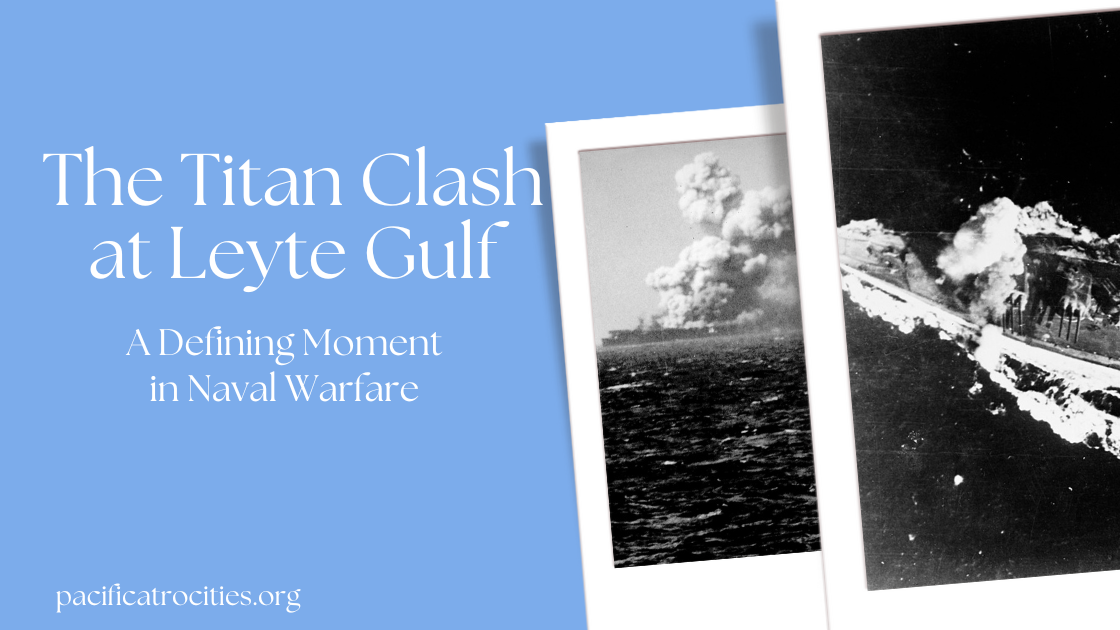
The Battle of Leyte Gulf, which occurred between October 23 and 26, 1944, remains the largest naval engagement in history. This titanic clash occurred in the waters around the Philippine islands of Leyte, Samar, and Luzon during World War II, involving the United States Navy and the Imperial Japanese Navy. The battle's enormity and pivotal role in the Pacific theater underscore its historical significance.
Strategic Prelude
The engagement at Leyte Gulf was crucial to the Allied campaign to liberate the Philippines from Japanese control. Led by General Douglas MacArthur, who vowed, "I shall return," the Allies aimed to secure a foothold on Leyte Island to facilitate the liberation of the Philippines (Holland, 2018). The Japanese, recognizing the strategic importance of the Philippines, launched Operation Sho-Go to thwart the Allied landings and maintain control over the region (Willmott, 2005).
Battle Dynamics
The Battle of Leyte Gulf comprised four main engagements, each distinct in its operational context and tactical execution:​​
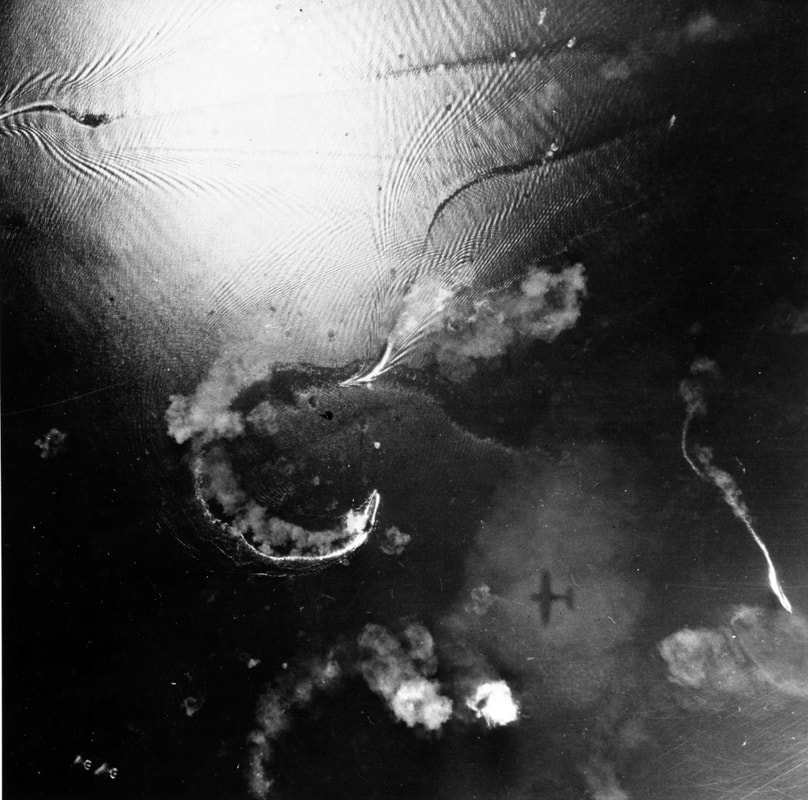
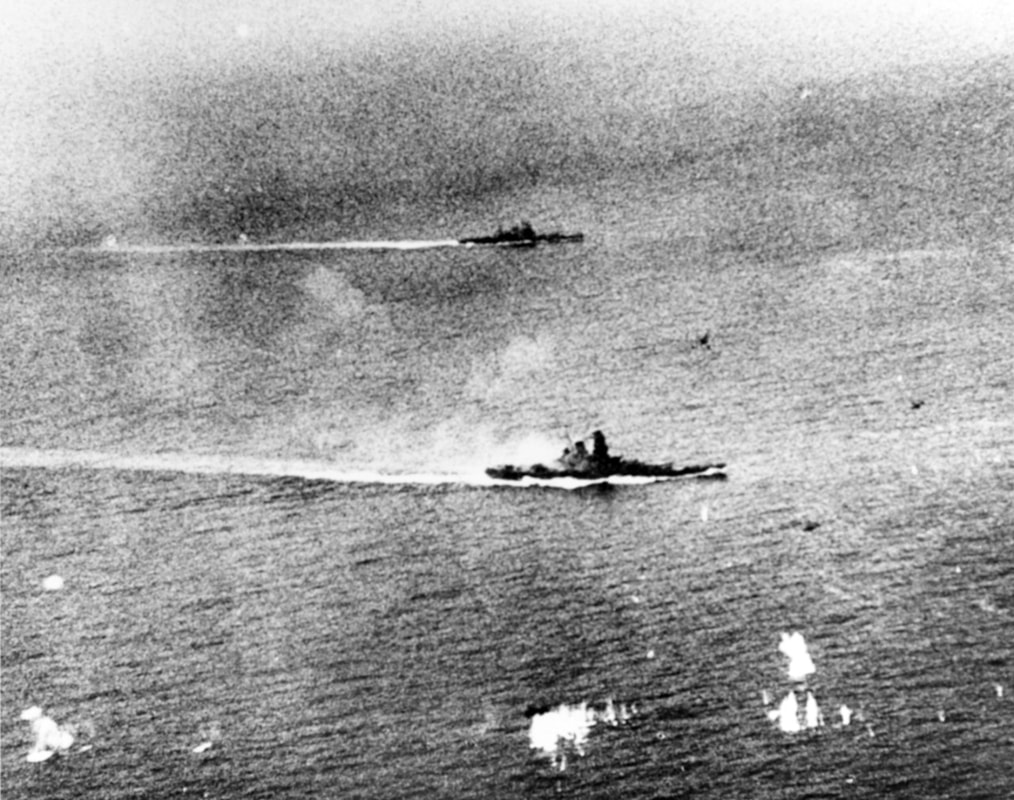
Battle of the Sibuyan Sea (October 24, 1944): The Battle of the Sibuyan Sea, a crucial segment of the larger Leyte Gulf engagement, unfolded on October 24, 1944. This battle was characterized by the strategic aerial assault executed by American carrier-based aircraft against the Japanese fleet navigating through the Sibuyan Sea. The operation aimed to weaken the Japanese naval strength and disrupt their plans to counter the Allied landings on Leyte.
At the heart of this engagement was the targeting and sinking of the Musashi, one of the two Yamato-class battleships, the heaviest and most powerfully armed battleships ever constructed. The Musashi, displacing over 72,000 tons when fully loaded, was a formidable force, boasting an array of 18.1-inch guns and heavily armored against attacks.
Throughout the day, the Musashi was subjected to multiple waves of attack from American aircraft, which included dive bombers, torpedo bombers, and fighters. The relentless aerial assault launched from carriers such as the USS Intrepid, USS Cabot, and USS Essex involved dropping bombs and torpedoes on the Musashi and the other vessels in the Japanese fleet. Despite its advanced armor and defensive capabilities, the Musashi sustained critical damage from numerous bomb and torpedo hits, which led to its eventual sinking. This loss represented a significant blow to the Japanese naval power and showcased the effectiveness of coordinated aerial warfare in neutralizing major naval threats.
The Battle of the Sibuyan Sea demonstrated the shifting dynamics of naval warfare, where air power played an increasingly decisive role. It also highlighted the vulnerability of traditional battleships in the face of aerial assault, marking a turning point in naval strategy and tactics. The sinking of the Musashi and the damage inflicted on other Japanese vessels significantly reduced the combat effectiveness of the Japanese fleet. They contributed to the overall success of the Allied forces in the Battle of Leyte Gulf (Cutler, 2013).​

Picture
Title: Battle of the Sibuyan Sea, 24 October 1944 Description: Japanese battleship Yamato (lower center) and other ships maneuver while under attack by U.S. Navy carrier-based aircraft in the Sibuyan Sea. The shadow of one plane is visible on a cloud in lower right center. Official U.S. Navy Photograph, now in the collections of the National Archives. Catalog #: 80-G-46986 https://www.history.navy.mil/content/history/nhhc/our-collections/photography/numerical-list-of-images/nara-series/80-g/80-G-40000/80-G-46986.html
Battle of Surigao Strait (October 25, 1944): The Battle of Surigao Strait, which occurred on October 25, 1944, stands out in naval history as the last time battleships engaged each other in a classic line-of-battle formation. This confrontation was part of the larger Leyte Gulf engagements, where the Allied forces aimed to prevent the Japanese fleet from disrupting the American landings on Leyte Island.
In this battle, the Allied naval forces, led by Vice Admiral Jesse B. Oldendorf, executed a masterful tactical maneuver known as "crossing the T." This tactic, a fundamental concept in naval warfare, involves positioning one's fleet so that it can fire broadsides at the enemy, who can only respond with their forward guns. Effectively, the T-crosser can bring all its firepower to bear while the enemy is limited in its response.
The Japanese Southern Force, commanded by Vice Admiral Shoji Nishimura, and later joined by Vice Admiral Kiyohide Shima's force, attempted to pass through the Surigao Strait to reach and attack the Allied landing beaches at Leyte. However, they were unaware that they were sailing into a well-prepared ambush. The Allied forces, consisting of battleships, cruisers, and destroyers, were strategically positioned in the strait. Many of these battleships, including the USS West Virginia, USS Maryland, and USS Mississippi, had been repaired and updated after being damaged in the attack on Pearl Harbor, and they were eager for retribution.
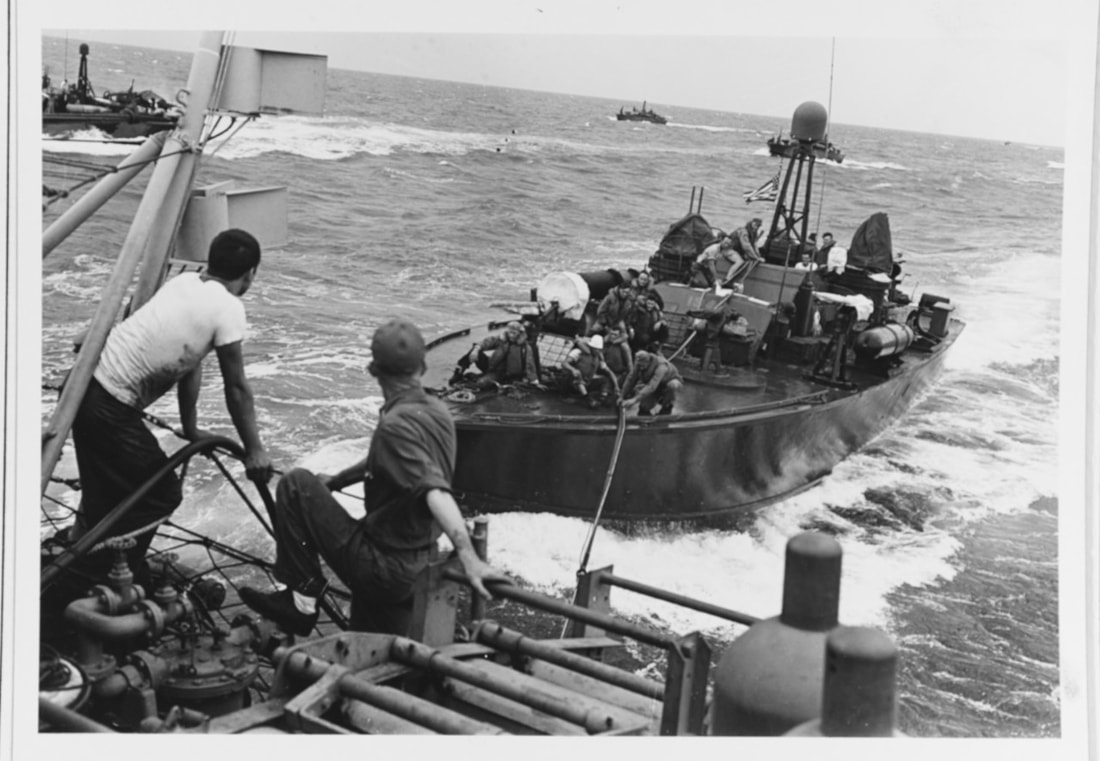
As the Japanese fleet entered the strait, they were first attacked by American PT boats and destroyers, which launched torpedoes that succeeded in sinking one of the Japanese battleships and damaging others. Following this initial engagement, as the Japanese continued to advance, they were confronted by the waiting Allied battleships and cruisers. These Allied ships, aligned for battle, commenced a devastating bombardment, crossing the T against the Japanese fleet.
The Japanese force was severely outmatched and suffered heavy losses, including the sinking of the battleship Fuso and heavy cruiser Mogami, among others. Allied forces' strategic positioning and superior firepower led to a decisive victory in the Surigao Strait. This engagement not only marked the end of the era of battleship dominance in naval warfare but also showcased the effectiveness of combined arms tactics, including the use of destroyers, PT boats, and aircraft in conjunction with the battleship fleet to achieve a comprehensive victory (Thomas, 2017).
Picture
Title: USS PT-194 Description: Refueling from USS Wachapreague (AGP-8) on 20 October 1944 while enroute from Palau to Leyte Gulf. Official U.S. Navy Photograph, now in the collections of the National Archives. Catalog #: 80-G-345815 https://www.history.navy.mil/content/history/nhhc/our-collections/photography/numerical-list-of-images/nara-series/80-g/80-G-340000/80-G-345815.html
Battle of Cape Engaño (October 25-26, 1944): The Battle of Cape Engaño, fought on October 25 and 26, 1944, was a critical component of the larger Leyte Gulf engagements, characterized by strategic deception and naval maneuvering. This battle occurred on the northern flank of the operational theater, where Admiral William F. Halsey, Jr., commander of the US Third Fleet, was lured away from the main action near Leyte Gulf by a Japanese decoy operation.
The Japanese Northern Force, commanded by Vice Admiral Jisaburō Ozawa, played a pivotal role in this deception. Ozawa's force included several aircraft carriers, such as the Zuikaku, the last of the carriers that had participated in the attack on Pearl Harbor, and a number of smaller carriers and escorts. These carriers, however, were not fully equipped with operational aircraft or experienced aircrews; their primary mission was to act as bait to draw the American fleet away from Leyte Gulf and the vulnerable landing forces there.
Admiral Halsey took the bait. Believing that he could eliminate the Japanese carrier threat once and for all, he directed the bulk of his mighty Third Fleet, including fast battleships, cruisers, and destroyers, northward to engage Ozawa's force. This decision left the San Bernardino Strait inadequately defended, enabling the central force of the Japanese Navy, under Vice Admiral Takeo Kurita, to advance towards the American beachheads at Leyte unopposed.
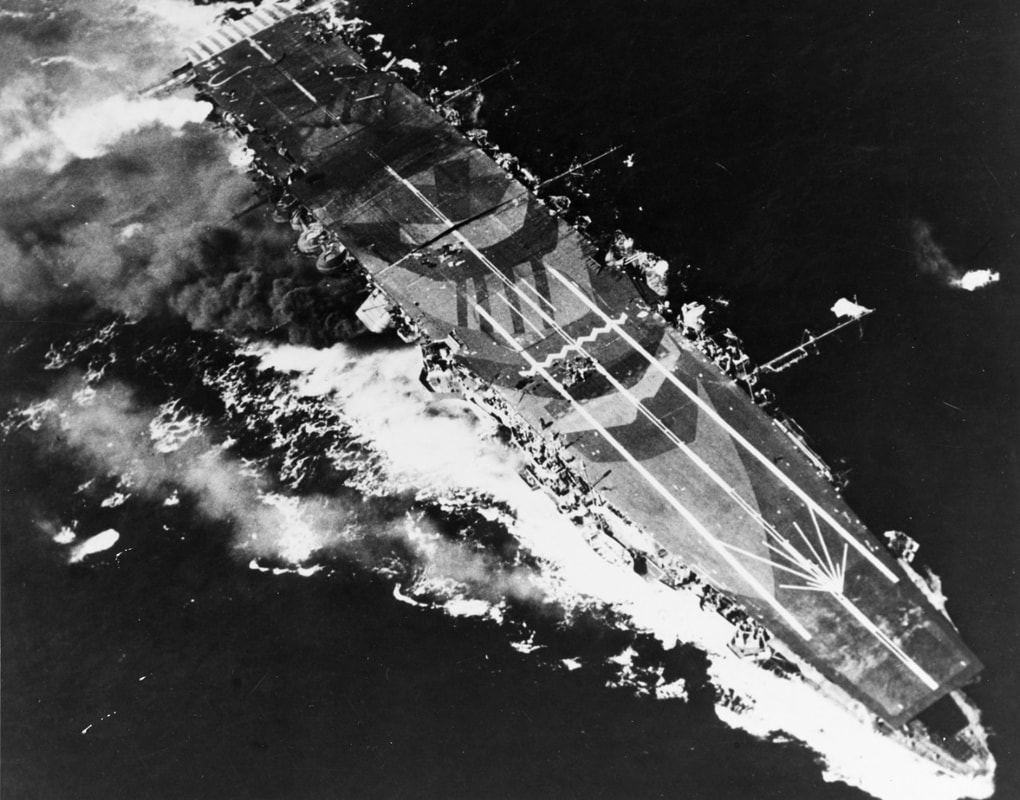
The battle itself, off Cape Engaño, was a one-sided affair. Halsey's fleet, including several carrier groups, launched a series of air strikes against Ozawa's carriers. Over the course of the two days, American aircraft achieved considerable success, sinking the Japanese carriers Zuikaku, Zuihō, Chitose, and Chiyoda, along with a destroyer. The engagement demonstrated the overwhelming air superiority of the American forces and the effective use of carrier-based aircraft in naval warfare.
However, the strategic implications of the battle were profound. Halsey's decision to pursue Ozawa left the central Philippine Sea and the Leyte invasion fleet vulnerable to Kurita's force, which nearly resulted in a significant defeat for the Allies in the Battle off Samar. The Battle of Cape Engaño is often cited as a classic example of successful naval misdirection, showcasing the importance of intelligence, reconnaissance, and strategic decision-making in naval warfare (Toll, 2015).
Picture
Title: Battle of Leyte Gulf Description: Japanese aircraft carrier Zuiho under attack by planes from USS Enterprise during the Battle off Cape Engano, 25 October 1944. Accession #: 80-G Catalog #: 80-G-281768 https://www.history.navy.mil/content/history/nhhc/our-collections/photography/numerical-list-of-images/nara-series/80-g/80-G-280000/80-g-281768-battle-of-leyte-gulf.html
Battle off Samar (October 25, 1944): The Battle off Samar, occurring on October 25, 1944, is renowned as one of the most dramatic and unexpected confrontations in naval history. This battle was part of the larger Leyte Gulf engagements, but what set it apart was the sheer disparity in force sizes and the display of extraordinary courage by the American sailors.
The American force involved in this battle, known as "Taffy 3," was one of the three task groups of the Seventh Fleet's escort carrier force. Commanded by Rear Admiral Clifton Sprague, Taffy 3 consisted of six escort carriers (CVEs), three destroyers (DDs), and four destroyer escorts (DEs). These ships were primarily designed for anti-submarine warfare and aircraft transportation, not for engaging a major enemy battle fleet.
Opposing them was the Central Force of the Japanese Navy, commanded by Vice Admiral Takeo Kurita. This force included four battleships, six heavy cruisers, two light cruisers, and eleven destroyers. Among the Japanese battleships was the Yamato, the largest battleship ever constructed, which alone displaced more than the entire Taffy 3 group combined.
The battle commenced early in the morning when Taffy 3 unexpectedly encountered Kurita's force. The Japanese sought to break through the American defenses and attack the amphibious forces in Leyte Gulf, which were vulnerable without the protection of Halsey's Third Fleet, then engaged off Cape Engaño.
Despite the overwhelming odds, the American forces engaged the Japanese with a tenacity and bravery that had become legendary. The escort carriers launched their aircraft, which, although primarily armed with depth charges and other anti-submarine weapons, attacked the Japanese ships with whatever they had, including machine guns and small bombs. Meanwhile, the American destroyers and destroyer escorts executed daring torpedo attacks, pressing close to the larger Japanese ships to launch their weapons.
The USS Johnston, a Fletcher-class destroyer, exemplified this courage. Commanded by Lieutenant Commander Ernest E. Evans, the Johnston charged the Japanese line, firing torpedoes and scoring hits on the heavy cruiser Kumano. Despite being severely damaged and ultimately sunk, the Johnston and her crew inflicted significant damage and disruption on the Japanese formation.
The aggressive defense mounted by Taffy 3 confused and delayed the Japanese, leading Kurita to believe he was engaging a much larger force. This misunderstanding, combined with the ferocity of the American attack, compelled Kurita to order a withdrawal, fearing an imminent counterattack by American battleships that did not actually exist in the vicinity.
The Battle off Samar highlighted the importance of individual valor and tactical ingenuity in warfare. The Americans, despite being outgunned and outnumbered, managed to hold off a superior enemy force, safeguarding the landing operations at Leyte and contributing significantly to the overall success of the Leyte Gulf campaign. This battle, often referred to as the "last stand of the tin can sailors," stands as a testament to the courage and resolve of the American naval personnel involved (Hornfischer, 2006).
Picture
Title: Battle off Samar, 25 October 1944 Caption: Description: Japanese battleship Yamato (foreground) and a heavy cruiser in action during the Battle off Samar. The cruiser appears to be either Tone or Chikuma. Photographed from a USS Petrof Bay (CVE-80) plane. Official U.S. Navy Photograph, now in the collections of the National Archives. Catalog #: 80-G-378525 Original Date: 1944-10-25 https://www.history.navy.mil/content/history/nhhc/our-collections/photography/numerical-list-of-images/nara-series/80-g/80-G-370000/80-G-378525.html
Impact and Legacy
The Battle of Leyte Gulf was a crushing defeat for the Japanese Navy, marking a turning point in the Pacific War. It significantly impaired Japan's naval capabilities, leading to Allied dominance in the region and setting the stage for Japan's eventual surrender (Drea, 2009). The battle also signified the ascendancy of naval air power, heralding the decline of the battleship as the predominant force in maritime conflict (Symonds, 2018).
In retrospect, the Battle of Leyte Gulf was more than just a colossal naval engagement; it was a critical juncture in naval history that exemplified the evolution of naval warfare and the extraordinary courage of those who fought on the vast expanses of the Pacific.


Sources:
Cutler, Thomas J. (2013). The Battle of Leyte Gulf: 23-26 October 1944. Naval Institute Press. 
Drea, Edward J. (2009). In the Service of the Emperor: Essays on the Imperial Japanese Army. University of Nebraska Press.
Holland, James (2018). Big Week: The Biggest Air Battle of World War II. Bantam Press. 
Hornfischer, James D. (2006). Last Stand of the Tin Can Sailors: The Extraordinary World War II Story of the US Navy's Finest Hour. Bantam Books. 
Symonds, Craig L. (2018). World War II at Sea: A Global History. Oxford University Press. 
Thomas, Evan (2017). Sea of Thunder: Four Commanders and the Last Great Naval Campaign 1941-1945. Simon & Schuster. 
Toll, Ian W. (2015). Pacific Crucible: War at Sea in the Pacific, 1941–1942. W. W. Norton & Company. 
0 Comments


Leave a Reply.

Pacific Atrocities Education
1639 Polk Street #1070
San Francisco, CA 94109
​415-988-9889
Copyright © 2021 Pacific Atrocities Education.
​We are a registered 501 (c)(3) charity. All donations are tax deductible.​
Donate Now
  • Home
    • Host a Fundraiser for Pacific Atrocities Education
    • About >
      • FAQ's - Frequently Asked Questions
    • Support Us >
      • Projects you can support! >
        • Distributing Books
        • Presenting at 112th Annual Meeting of Pacific Coast Branch
        • Summer Research Relocation Fund
    • Contact
  • Stories
    • James Bradley on Pacific Front Untold
    • Videos >
      • Black Hearts (2021)
    • Blog
  • Internship
    • Summer 2026 Internship
    • Fall 2025 Internship
    • Summer 2025 Internship
    • Spring 2025 Internship
    • Summer 2024 Internship
    • Summer 2023 Internship
    • Fall 2022 Internship
    • Summer 2022 Internship
    • Summer 2021 Internship
    • Fall 2020- Spring 2021 Internship
    • Summer 2020 Internship
    • Fall 2019 Internship
    • Summer 2019 Internship >
      • Public History Night
    • School Year 2018-2019 Internship
    • Summer 2018 Internship >
      • 2018 Summer Showcase + Fundraiser
    • Fall 2017 Internship
    • Summer 2017 Internship >
      • 2017 Summer Showcase & Fundraiser
  • Books
  • Archives
  • Resource Page
    • Supplementary Research Guides >
      • Unit 731 - Guide >
        • Background of Biochemical Warfare Development
        • Imperial Japan's Chemical Warfare Development Program
        • Map of Unit 731
        • Personnel of Unit 731
        • Duties of Unit 731
        • Human Experimentation
        • [GRAPHIC] Germ Warfare Attacks
        • Cover Ups After the War
        • [OLD] Cover Ups After the War
      • Philippines' Resistance - Guide >
        • Philippines World War II Timeline
        • The Japanese Invasion & Conquest of the Philippines
        • Bataan Death March
        • Formation of Underground Philippines Resistance
        • Supplies of the Guerrilla Fighters
        • The Hukbalahap
        • Hunter's ROTC
        • Marking's Guerrillas
        • United States Army Forces in the Philippines of Northern Luzon (USAFIP-NL)
        • The Aetas
        • Chinese and Filipino-Chinese Nationalist Guerrilla Units
        • The Female Faces of the Philippine Guerrillas
      • Rising Sun Flag - Guide >
        • History of the Rising Sun Flag
        • Atrocities Committed Under the Flag
        • Rising Sun Flag in Pop Culture
      • Pinay Guerrilleras - Guide >
        • Japanese Occupation of the Philippine Islands: Pinays Answering the Call to Arms
        • The Fierce Heneralas and Kumanders of the Hukbalahap Guerrillas
        • Amazons of the Pacific Theater
        • Filipina American Veterans: Recovering the Extraordinary Feats of the Ordinary Pinays
        • The Legacy of the Asian Women Soldier
      • Fall of Singapore - Guide >
        • Singapore World War II Timeline
        • History of World War II in the Pacific
        • History of Singapore
        • Japan's Conquest in Asia
        • Japan's Invasion of the Malay Peninsula
        • Sook Ching Massacre
        • Double Tenth Incident
        • Social Changes and Challenges in Singapore
        • Voices from Syonan
        • Return to British Rule
      • Three Years and Eight Months - Guide >
        • Hong Kong before WW2
        • Buildup to World War 2
        • The Battle of Hong Kong
        • Life during 3 Years and 8 Months
        • East River Column Guerrilla Fighters
        • Prisoners of War Camps
        • End of Japanese Occupation
        • War Crimes Trials
      • Siamese Sovereignty - Guide >
        • The Land of Smiles
        • The Thai-Japanese Relationship
        • Phibun’s Domestic and International Policies
        • The Free Thai Resistance Movement
        • Post WW2 Aftermath of Thailand
      • The Khabarovsk War Crimes Trial - Guide >
        • Defendants of Khabarovsk War Crime
        • The Japanese Empire and USSR in WW2
        • The Employment of the Bacteriological Weapon in the War
        • Planning of Japan invasion to USSR
      • Unit 731 Cover-up : The Operation Paperclip of the East - Guide >
        • Establishing Manchukuo
        • The Development of Unit 731
        • Plan Kantokuen and Bacteriological Warfare
        • The Downfall of the Japanese WW2 Era
        • Three Stages of Interrogations
        • Lasting Impacts
      • Marutas of Unit 731 - Guide >
        • How did Ishii Shiro start unit 731?
        • A Beta Testing Site
        • Establishing Pingfan
        • Experiences at the Human Experimentation Complex
        • Vivisection at the Unit 731
        • Anta Testing Grounds
        • Overall Advance from the Laboratory Creations
        • The End of the War
      • Prince Konoe Memoir - Guide >
        • Who is Prince Konoe?
        • Preparation to Tripartite Pact
        • Emperor Hirohito and Prince Konoe
        • The End of Prince Konoe
      • Competing Empires in Burma - Guide >
        • What was the China-Burma-India Theater?
        • When did the China-Burma-India Theater Happen?
        • Who Fought in the China-Burma-India Theater?
        • The Second Sino Japanese War
        • Japan in the South
        • Operation U-Go
      • Battle of Shanghai - Guide >
        • The Battle of Shanghai. Background
        • Shanghai Before War
        • The First Battle of Shanghai 1932
        • Battle of Shanghai 1937
        • Aftermath of Battle for Shanghai
      • Ishi Shiro - Guide >
        • History of Biological Weapons and The Young Ishii Shiro
        • Establishment in Manchuria
        • Pingfang District - Harbin
        • Failures and Corruption
        • Post War
      • Taiwan The Israel of the East - Guide >
        • Background of Formosa
        • Industrialization of Japan
        • China During WWII
        • Taiwan under Kuomintang
        • New Taiwanese National Identity
      • Seeking Justice for Biological Warfare Victims of Unit 731 - Guide >
        • Introduction of Wang Xuan
        • Colonel Memorandum
        • The Beginning of Biological Warfare
        • The Bacteriological Warfare on China
        • Victims in Zhejiang’s Testimonies
        • After the War
      • Rice and Revolution - Guide >
        • The French Colonial Period
        • Anti-Colonial Resistance
        • The Rise of the Communist Movement
        • Imperial Japan’s Entry into Indochina
        • The Portents of Famine
        • The Famine (1944-45)
        • Legacy of the 1944-45 Vietnam Famine
      • Clash of Empires - Guide >
        • Japan’s Imperialist Origins
        • Japan’s Competition against the West: Nanshin-ron and Hokushin-ron
        • Japanese Imperialism Through the Lens of French Indochina
        • The U.S.-Japan Relations and the Pearl Harbor Attack
      • Hunger for Power and Self-SufficiencyI - Guide >
        • The Influence of War Rations on Post-War Culinary Transformations
        • How World War II Complicated Food Scarcity and Invention
        • American Military Innovations
        • Government-Sponsored Food Inventions in Europe during World War II
        • Feeding the Army: The Adaptation of Japanese Military Cuisine and Its Impact on the Philippines
        • Mixed Dishes: Culinary Innovations Driven by Necessity and Food Scarcity
      • Denial A Quick Look of History of Comfort Women and Present Days’ Complication - Guide >
        • The Comfort Women System and the Fight for Recognition
        • The Role of Activism and International Pressure
        • The Controversy over Japanese History Textbooks
        • The Sonyŏsang Statue and the Symbolism of Public Memorials
        • Activism and Support from Japanese Citizens
        • The Future of Comfort Women Memorials and Education
      • Echoes of Empire: The Power of Japanese Propaganda - Guide >
        • Brief Overview of Imperial Japan
        • Defining Propaganda
        • Propaganda Encouraging Action​
        • The Rise of Nationalism
        • The Formation of Japanese State Propaganda
        • Youth and Education
      • Shadows of the Rising Sun: The Black Dragon Society and the Dawn of Pan-Asianism - Guide >
        • Origins of the Black Dragon Society
        • The Influence of Pan-Asianism
        • Relationship with Sun Yat-sen
        • The Role in Southeast Asia
        • The Spread of Ideology and Espionage
        • Disbandment and Legacy
      • Chongqing Bombing: The Forgotten Blitz of Asia and Its Lasting Impact - Guide >
        • Introduction and Historical Background
        • The Class Divide During the Bombings
        • Resilience and Unity of Chongqing
        • Key Incidents - Great Tunnel Massacre
        • The Aftermath of the Bombings
        • Legacy and Commemoration
      • Shanghai's International Zone: A Nexus of War, Intelligence, and Survival - Guide >
        • Historical Background
        • The International Zone
        • Battles in Shanghai
        • Civilian Intelligence Efforts
        • Wartime Brutality
        • Aftermath & Legacy
      • Operation Ichigo A struggle of strategies and alliances in the China Theater​ - GUIDE >
        • Strategic Background of Operation Ichigo
        • Prelude to Ichigo: Internal Chinese Challenges
        • Planning and Execution of Operation Ichigo
        • Logistical Struggles & Air Power
        • Sino-American Command Crisis
        • Consequences & Legacy of Operation Ichigo
      • The Rise of the Kwantung Army: ​Japan’s Empire in Manchuria to 1932 - Guide >
        • European Modernity Arrives in East Asia
        • The Meiji Restoration and Military Modernization
        • Secret Societies and Intelligence Networks
        • Japan’s “Two Splendid Little Wars”​
        • From Treaty to Territory: Kwantung Leased Territory and the SMR
        • Empire by Soybean: Economy, Ports, and Settlement
        • China in Turmoil: Warlords, Nationalists, and a Fragmented Republic
        • Positive Policy and Gekokujō
        • Countdown to 1931
        • Mukden and the Conquest of Manchuria
        • Manchukuo and the Politics of Puppet States
        • Legacies and Lessons
      • Unveiled Horrors: ​Uncovering Japan’s Wartime Human Experimentation - Guide >
        • Human Experimentation in the Tokyo Region POW Camps
        • Unit 731 Background and Shiro Ishii
        • Shinagawa POW Hospital and Dr. Hisakichi Tokuda
        • Kyushu Imperial University Vivisections
        • Gendered & Hierarchical Dynamics of Human Experimentation
        • The Collapse of Japanese Medical Ethics in WWII
    • Lesson Plans >
      • Reparations
      • Ethics in Science
      • Writing the Narrative of a Pinay Fighter
      • Privilege Journal
      • Environmental Injustices
      • Female Guerrillas
      • Hunter's ROTC
      • Scientific Advancements
      • Seeking Justice: A Humanities Lesson Plan
      • The Hukbalahap
      • Trading Immunity
      • Bataan Death March
      • Biochemical Warfare Development
  • Membership
Contribute