Pacific Atrocities Education
  • Home
    • Host a Fundraiser for Pacific Atrocities Education
    • About >
      • FAQ's - Frequently Asked Questions
    • Support Us >
      • Projects you can support! >
        • Distributing Books
        • Presenting at 112th Annual Meeting of Pacific Coast Branch
        • Summer Research Relocation Fund
    • Contact
  • Stories
    • James Bradley on Pacific Front Untold
    • Videos >
      • Black Hearts (2021)
    • Blog
  • Internship
    • Summer 2026 Internship
    • Fall 2025 Internship
    • Summer 2025 Internship
    • Spring 2025 Internship
    • Summer 2024 Internship
    • Summer 2023 Internship
    • Fall 2022 Internship
    • Summer 2022 Internship
    • Summer 2021 Internship
    • Fall 2020- Spring 2021 Internship
    • Summer 2020 Internship
    • Fall 2019 Internship
    • Summer 2019 Internship >
      • Public History Night
    • School Year 2018-2019 Internship
    • Summer 2018 Internship >
      • 2018 Summer Showcase + Fundraiser
    • Fall 2017 Internship
    • Summer 2017 Internship >
      • 2017 Summer Showcase & Fundraiser
  • Books
  • Archives
  • Resource Page
    • Supplementary Research Guides >
      • Unit 731 - Guide >
        • Background of Biochemical Warfare Development
        • Imperial Japan's Chemical Warfare Development Program
        • Map of Unit 731
        • Personnel of Unit 731
        • Duties of Unit 731
        • Human Experimentation
        • [GRAPHIC] Germ Warfare Attacks
        • Cover Ups After the War
        • [OLD] Cover Ups After the War
      • Philippines' Resistance - Guide >
        • Philippines World War II Timeline
        • The Japanese Invasion & Conquest of the Philippines
        • Bataan Death March
        • Formation of Underground Philippines Resistance
        • Supplies of the Guerrilla Fighters
        • The Hukbalahap
        • Hunter's ROTC
        • Marking's Guerrillas
        • United States Army Forces in the Philippines of Northern Luzon (USAFIP-NL)
        • The Aetas
        • Chinese and Filipino-Chinese Nationalist Guerrilla Units
        • The Female Faces of the Philippine Guerrillas
      • Rising Sun Flag - Guide >
        • History of the Rising Sun Flag
        • Atrocities Committed Under the Flag
        • Rising Sun Flag in Pop Culture
      • Pinay Guerrilleras - Guide >
        • Japanese Occupation of the Philippine Islands: Pinays Answering the Call to Arms
        • The Fierce Heneralas and Kumanders of the Hukbalahap Guerrillas
        • Amazons of the Pacific Theater
        • Filipina American Veterans: Recovering the Extraordinary Feats of the Ordinary Pinays
        • The Legacy of the Asian Women Soldier
      • Fall of Singapore - Guide >
        • Singapore World War II Timeline
        • History of World War II in the Pacific
        • History of Singapore
        • Japan's Conquest in Asia
        • Japan's Invasion of the Malay Peninsula
        • Sook Ching Massacre
        • Double Tenth Incident
        • Social Changes and Challenges in Singapore
        • Voices from Syonan
        • Return to British Rule
      • Three Years and Eight Months - Guide >
        • Hong Kong before WW2
        • Buildup to World War 2
        • The Battle of Hong Kong
        • Life during 3 Years and 8 Months
        • East River Column Guerrilla Fighters
        • Prisoners of War Camps
        • End of Japanese Occupation
        • War Crimes Trials
      • Siamese Sovereignty - Guide >
        • The Land of Smiles
        • The Thai-Japanese Relationship
        • Phibun’s Domestic and International Policies
        • The Free Thai Resistance Movement
        • Post WW2 Aftermath of Thailand
      • The Khabarovsk War Crimes Trial - Guide >
        • Defendants of Khabarovsk War Crime
        • The Japanese Empire and USSR in WW2
        • The Employment of the Bacteriological Weapon in the War
        • Planning of Japan invasion to USSR
      • Unit 731 Cover-up : The Operation Paperclip of the East - Guide >
        • Establishing Manchukuo
        • The Development of Unit 731
        • Plan Kantokuen and Bacteriological Warfare
        • The Downfall of the Japanese WW2 Era
        • Three Stages of Interrogations
        • Lasting Impacts
      • Marutas of Unit 731 - Guide >
        • How did Ishii Shiro start unit 731?
        • A Beta Testing Site
        • Establishing Pingfan
        • Experiences at the Human Experimentation Complex
        • Vivisection at the Unit 731
        • Anta Testing Grounds
        • Overall Advance from the Laboratory Creations
        • The End of the War
      • Prince Konoe Memoir - Guide >
        • Who is Prince Konoe?
        • Preparation to Tripartite Pact
        • Emperor Hirohito and Prince Konoe
        • The End of Prince Konoe
      • Competing Empires in Burma - Guide >
        • What was the China-Burma-India Theater?
        • When did the China-Burma-India Theater Happen?
        • Who Fought in the China-Burma-India Theater?
        • The Second Sino Japanese War
        • Japan in the South
        • Operation U-Go
      • Battle of Shanghai - Guide >
        • The Battle of Shanghai. Background
        • Shanghai Before War
        • The First Battle of Shanghai 1932
        • Battle of Shanghai 1937
        • Aftermath of Battle for Shanghai
      • Ishi Shiro - Guide >
        • History of Biological Weapons and The Young Ishii Shiro
        • Establishment in Manchuria
        • Pingfang District - Harbin
        • Failures and Corruption
        • Post War
      • Taiwan The Israel of the East - Guide >
        • Background of Formosa
        • Industrialization of Japan
        • China During WWII
        • Taiwan under Kuomintang
        • New Taiwanese National Identity
      • Seeking Justice for Biological Warfare Victims of Unit 731 - Guide >
        • Introduction of Wang Xuan
        • Colonel Memorandum
        • The Beginning of Biological Warfare
        • The Bacteriological Warfare on China
        • Victims in Zhejiang’s Testimonies
        • After the War
      • Rice and Revolution - Guide >
        • The French Colonial Period
        • Anti-Colonial Resistance
        • The Rise of the Communist Movement
        • Imperial Japan’s Entry into Indochina
        • The Portents of Famine
        • The Famine (1944-45)
        • Legacy of the 1944-45 Vietnam Famine
      • Clash of Empires - Guide >
        • Japan’s Imperialist Origins
        • Japan’s Competition against the West: Nanshin-ron and Hokushin-ron
        • Japanese Imperialism Through the Lens of French Indochina
        • The U.S.-Japan Relations and the Pearl Harbor Attack
      • Hunger for Power and Self-SufficiencyI - Guide >
        • The Influence of War Rations on Post-War Culinary Transformations
        • How World War II Complicated Food Scarcity and Invention
        • American Military Innovations
        • Government-Sponsored Food Inventions in Europe during World War II
        • Feeding the Army: The Adaptation of Japanese Military Cuisine and Its Impact on the Philippines
        • Mixed Dishes: Culinary Innovations Driven by Necessity and Food Scarcity
      • Denial A Quick Look of History of Comfort Women and Present Days’ Complication - Guide >
        • The Comfort Women System and the Fight for Recognition
        • The Role of Activism and International Pressure
        • The Controversy over Japanese History Textbooks
        • The Sonyŏsang Statue and the Symbolism of Public Memorials
        • Activism and Support from Japanese Citizens
        • The Future of Comfort Women Memorials and Education
      • Echoes of Empire: The Power of Japanese Propaganda - Guide >
        • Brief Overview of Imperial Japan
        • Defining Propaganda
        • Propaganda Encouraging Action​
        • The Rise of Nationalism
        • The Formation of Japanese State Propaganda
        • Youth and Education
      • Shadows of the Rising Sun: The Black Dragon Society and the Dawn of Pan-Asianism - Guide >
        • Origins of the Black Dragon Society
        • The Influence of Pan-Asianism
        • Relationship with Sun Yat-sen
        • The Role in Southeast Asia
        • The Spread of Ideology and Espionage
        • Disbandment and Legacy
      • Chongqing Bombing: The Forgotten Blitz of Asia and Its Lasting Impact - Guide >
        • Introduction and Historical Background
        • The Class Divide During the Bombings
        • Resilience and Unity of Chongqing
        • Key Incidents - Great Tunnel Massacre
        • The Aftermath of the Bombings
        • Legacy and Commemoration
      • Shanghai's International Zone: A Nexus of War, Intelligence, and Survival - Guide >
        • Historical Background
        • The International Zone
        • Battles in Shanghai
        • Civilian Intelligence Efforts
        • Wartime Brutality
        • Aftermath & Legacy
      • Operation Ichigo A struggle of strategies and alliances in the China Theater​ - GUIDE >
        • Strategic Background of Operation Ichigo
        • Prelude to Ichigo: Internal Chinese Challenges
        • Planning and Execution of Operation Ichigo
        • Logistical Struggles & Air Power
        • Sino-American Command Crisis
        • Consequences & Legacy of Operation Ichigo
      • The Rise of the Kwantung Army: ​Japan’s Empire in Manchuria to 1932 - Guide >
        • European Modernity Arrives in East Asia
        • The Meiji Restoration and Military Modernization
        • Secret Societies and Intelligence Networks
        • Japan’s “Two Splendid Little Wars”​
        • From Treaty to Territory: Kwantung Leased Territory and the SMR
        • Empire by Soybean: Economy, Ports, and Settlement
        • China in Turmoil: Warlords, Nationalists, and a Fragmented Republic
        • Positive Policy and Gekokujō
        • Countdown to 1931
        • Mukden and the Conquest of Manchuria
        • Manchukuo and the Politics of Puppet States
        • Legacies and Lessons
      • Unveiled Horrors: ​Uncovering Japan’s Wartime Human Experimentation - Guide >
        • Human Experimentation in the Tokyo Region POW Camps
        • Unit 731 Background and Shiro Ishii
        • Shinagawa POW Hospital and Dr. Hisakichi Tokuda
        • Kyushu Imperial University Vivisections
        • Gendered & Hierarchical Dynamics of Human Experimentation
        • The Collapse of Japanese Medical Ethics in WWII
    • Lesson Plans >
      • Reparations
      • Ethics in Science
      • Writing the Narrative of a Pinay Fighter
      • Privilege Journal
      • Environmental Injustices
      • Female Guerrillas
      • Hunter's ROTC
      • Scientific Advancements
      • Seeking Justice: A Humanities Lesson Plan
      • The Hukbalahap
      • Trading Immunity
      • Bataan Death March
      • Biochemical Warfare Development
  • Membership
Contribute

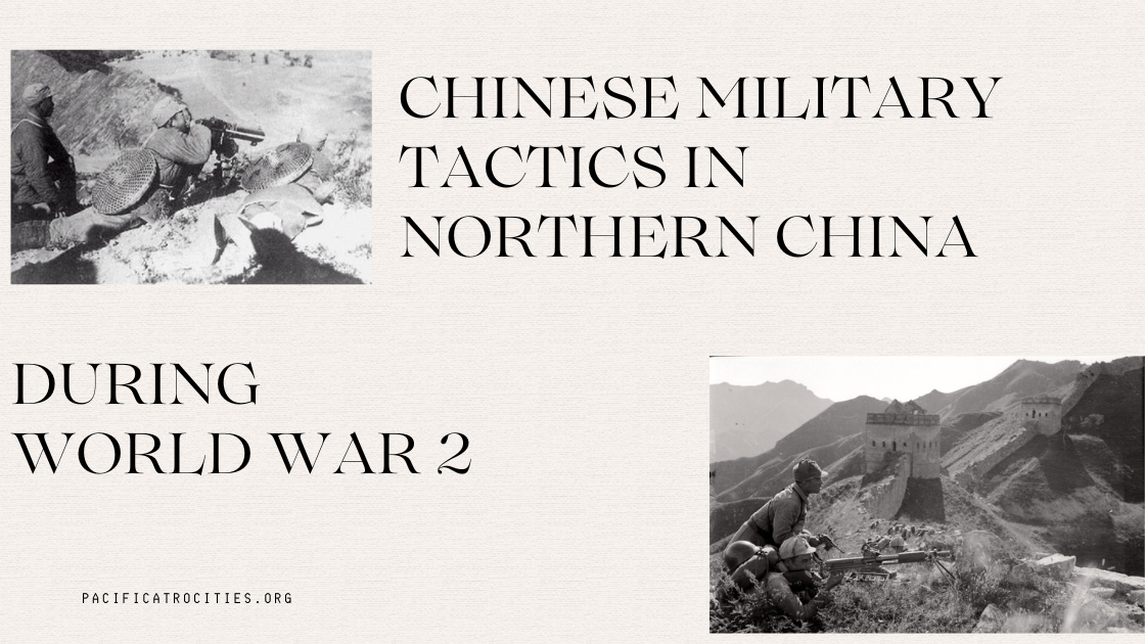
Chinese Military Tactics in Northern China During World War II

4/26/2024

1 Comment

 
by Jenny Chan
Picture
During the Second Sino-Japanese War, the Communist forces in China utilized a combination of guerrilla tactics, strategic utilization of Allied support, and advanced intelligence operations, proving particularly effective in Northern China. The approach highlights the ingenuity and resilience of the Communist forces. Furthermore, it underscores the complexities of warfare where strategic alliances and intelligence superiority augmented conventional military strength.
Guerrilla Warfare: A Strategic Response to Invasion
Guerrilla warfare was not just a tactical choice but a necessary strategy for Chinese forces during the Second Sino-Japanese War, particularly effective in the vast and diverse landscapes of Northern China. This approach allowed Chinese troops to maximize their geographical and societal advantages against the better-equipped Japanese forces.
Tactical Implementation
The guerrilla tactics employed involved small, highly mobile units that engaged in hit-and-run attacks, sabotage of Japanese supply lines, and ambushes. These actions were crucial in slowing Japanese advances and disrupting their logistical operations. According to Dreyer, the effectiveness of these guerrilla operations lay in their ability to force the Japanese to disperse their forces thinly across a large area, which diluted the strength of Japanese attacks and extended their supply chains to vulnerable lengths (Dreyer 1976).

Psychological Impact
Moreover, guerrilla warfare had a significant psychological impact on Japanese troops. The uncertainty and constant threat of ambush reduced Japanese morale and increased the stress on their troops, which were already stretched thin across vast occupied territories. As Tuchman elaborates, the psychological wear on the Japanese contributed as much to their setbacks as the physical attacks, complicating their military governance and stability in occupied regions (Tuchman 1971).
Community Involvement
The success of guerrilla warfare was also heavily reliant on the support and involvement of the local population. Chinese guerrilla fighters often relied on local communities for food, intelligence, and recruits. This symbiotic relationship not only bolstered the resources and information available to the guerrilla forces but also deepened the resistance's roots in the local population, making it harder for Japanese forces to establish effective control and gather intelligence. A network of local informants was able to provide critical insights into Japanese troop movements and vulnerabilities. (Wilson 1982).
Strategic Significance
​
The strategic use of guerrilla warfare by Chinese forces in Northern China during World War II showcases how resourceful and adaptive military tactics can overcome significant technological and numerical disadvantages. The Chinese ability to engage in this form of warfare disrupted Japanese plans and contributed significantly to the longevity and resilience of Chinese resistance. (Dreyer 1976).

The Eighth Route Army: Vanguard of the Resistance
Under the leadership of Zhu De朱德 and Peng Dehuai彭德怀, the Eighth Route Army was crucial in the widespread application of guerrilla tactics. This army, aligned with the Communist Party, specialized in sabotage and intelligence gathering, greatly disrupting Japanese operations in Northern China. (Pepper 1999).
One notable victory by the Eighth Route Army was the Battle of Pingxingguan, which occurred in September 1937. This battle was one of the first major victories for Chinese forces during the war. The Eighth Route Army utilized the element of surprise and intimate knowledge of the local terrain to ambush and defeat a significant Japanese force. This victory was not just a tactical win but also a significant morale booster for Chinese resistance forces and a demonstration of the effectiveness of guerrilla tactics against a better-equipped adversary.
This battle is often highlighted in historical analyses for its strategic execution and its role in boosting the morale of Chinese troops and the civilian population. The Eighth Route Army's success at Pingxingguan is a prime example of how guerrilla warfare tactics, when applied effectively, could lead to significant victories against a technologically superior enemy. (Sherman 1971).
Allied Support: Bolstering Chinese Capabilities
The Lend-Lease Act, initially targeted to support Allied forces including the Nationalist Government in China, indirectly influenced the Chinese Communist forces fighting in Northern China during World War II. While direct military aid was routed through Chiang Kai-shek's Nationalist government, the impacts of this aid reverberated through various channels, affecting the Communists as well.
Indirect Benefits to Communists
  1. Captured Equipment: As the Nationalist forces occasionally lost battles against the Japanese, some of the equipment and supplies provided through Lend-Lease ended up in the hands of Japanese troops. These materials were at times captured by Communist forces during subsequent encounters, thus inadvertently equipping them with resources originally intended for the Nationalists (Coble 1986).
  2. Weakening of Japanese Forces: The bolstering of Nationalist capabilities through Lend-Lease indirectly assisted the Communists by forcing the Japanese to spread their resources thinner across multiple fronts. This strategic diversion allowed Communist forces to face a less concentrated Japanese effort in Northern China, thereby easing their operational challenges (Peattie et al. 2011).
  3. Increased Stature: The overall enhancement of the Nationalist military through Lend-Lease also contributed to a general weakening of Japanese positions in China. As the Japanese were compelled to allocate more resources to combat the better-equipped Nationalist forces, the Communists benefited from a general weakening of Japanese capabilities across the region (Westad 2003).
Direct Allied Contact
The establishment of missions such as the Dixie Mission facilitated some level of direct interaction between American military advisors and Communist forces. Though not part of the Lend-Lease aid, these interactions helped transfer some level of strategic knowledge and military tactics to the Communists (Shalom 1990).
While the Lend-Lease Act did not directly supply the Communist forces, its broader strategic impact on the Sino-Japanese War indirectly facilitated Communist operations. The complexity of war logistics and the fluidity of front lines meant that aid intended for one group could sometimes end up benefiting another, demonstrating the intricate and unintended consequences of wartime aid.
Conclusion
The military strategies utilized by Chinese forces in Northern China during World War II exemplify a successful blend of guerrilla warfare, strategic international support, and robust intelligence operations. These strategies not only sustained Chinese resistance but also shaped the foundational tactics for modern asymmetric warfare. The adaptability and resilience shown by Chinese forces offer significant lessons in military strategy and historical warfare.​

Works Cited
​
Coble, Parks M. China's War Reporters: The Legacy of Resistance against Japan. Harvard University Press, 1986.
Dreyer, Edward L. China at War 1901-1949. Longman, 1976.
Peattie, Mark R., Edward J. Drea, and Hans van de Ven, eds. The Battle for China: Essays on the Military History of the Sino-Japanese War of 1937-1945. Stanford University Press, 2011.
Pepper, Suzanne. Civil War in China: The Political Struggle 1945-1949. 
Shalom, Stephen R. The United States and the Philippines: A Study of Neocolonialism. University of Pennsylvania Press, 1990.
Sherman, Mark. The Chinese War and the Collapse of the Japanese Empire. Harvard University Press, 1971.
Tuchman, Barbara W. Stilwell and the American Experience in China, 1911–45. Macmillan, 1971.
Westad, Odd Arne. Decisive Encounters: The Chinese Civil War, 1946-1950. Stanford University Press, 2003.
Wilson, Dick. When Tigers Fight: The Story of the Sino-Japanese War, 1937-1945. Viking Press, 1982.
1 Comment
dick jones
1/27/2025 08:02:21 am

cheeseburger

Reply


Leave a Reply.

Pacific Atrocities Education
1639 Polk Street #1070
San Francisco, CA 94109
​415-988-9889
Copyright © 2021 Pacific Atrocities Education.
​We are a registered 501 (c)(3) charity. All donations are tax deductible.​
Donate Now
  • Home
    • Host a Fundraiser for Pacific Atrocities Education
    • About >
      • FAQ's - Frequently Asked Questions
    • Support Us >
      • Projects you can support! >
        • Distributing Books
        • Presenting at 112th Annual Meeting of Pacific Coast Branch
        • Summer Research Relocation Fund
    • Contact
  • Stories
    • James Bradley on Pacific Front Untold
    • Videos >
      • Black Hearts (2021)
    • Blog
  • Internship
    • Summer 2026 Internship
    • Fall 2025 Internship
    • Summer 2025 Internship
    • Spring 2025 Internship
    • Summer 2024 Internship
    • Summer 2023 Internship
    • Fall 2022 Internship
    • Summer 2022 Internship
    • Summer 2021 Internship
    • Fall 2020- Spring 2021 Internship
    • Summer 2020 Internship
    • Fall 2019 Internship
    • Summer 2019 Internship >
      • Public History Night
    • School Year 2018-2019 Internship
    • Summer 2018 Internship >
      • 2018 Summer Showcase + Fundraiser
    • Fall 2017 Internship
    • Summer 2017 Internship >
      • 2017 Summer Showcase & Fundraiser
  • Books
  • Archives
  • Resource Page
    • Supplementary Research Guides >
      • Unit 731 - Guide >
        • Background of Biochemical Warfare Development
        • Imperial Japan's Chemical Warfare Development Program
        • Map of Unit 731
        • Personnel of Unit 731
        • Duties of Unit 731
        • Human Experimentation
        • [GRAPHIC] Germ Warfare Attacks
        • Cover Ups After the War
        • [OLD] Cover Ups After the War
      • Philippines' Resistance - Guide >
        • Philippines World War II Timeline
        • The Japanese Invasion & Conquest of the Philippines
        • Bataan Death March
        • Formation of Underground Philippines Resistance
        • Supplies of the Guerrilla Fighters
        • The Hukbalahap
        • Hunter's ROTC
        • Marking's Guerrillas
        • United States Army Forces in the Philippines of Northern Luzon (USAFIP-NL)
        • The Aetas
        • Chinese and Filipino-Chinese Nationalist Guerrilla Units
        • The Female Faces of the Philippine Guerrillas
      • Rising Sun Flag - Guide >
        • History of the Rising Sun Flag
        • Atrocities Committed Under the Flag
        • Rising Sun Flag in Pop Culture
      • Pinay Guerrilleras - Guide >
        • Japanese Occupation of the Philippine Islands: Pinays Answering the Call to Arms
        • The Fierce Heneralas and Kumanders of the Hukbalahap Guerrillas
        • Amazons of the Pacific Theater
        • Filipina American Veterans: Recovering the Extraordinary Feats of the Ordinary Pinays
        • The Legacy of the Asian Women Soldier
      • Fall of Singapore - Guide >
        • Singapore World War II Timeline
        • History of World War II in the Pacific
        • History of Singapore
        • Japan's Conquest in Asia
        • Japan's Invasion of the Malay Peninsula
        • Sook Ching Massacre
        • Double Tenth Incident
        • Social Changes and Challenges in Singapore
        • Voices from Syonan
        • Return to British Rule
      • Three Years and Eight Months - Guide >
        • Hong Kong before WW2
        • Buildup to World War 2
        • The Battle of Hong Kong
        • Life during 3 Years and 8 Months
        • East River Column Guerrilla Fighters
        • Prisoners of War Camps
        • End of Japanese Occupation
        • War Crimes Trials
      • Siamese Sovereignty - Guide >
        • The Land of Smiles
        • The Thai-Japanese Relationship
        • Phibun’s Domestic and International Policies
        • The Free Thai Resistance Movement
        • Post WW2 Aftermath of Thailand
      • The Khabarovsk War Crimes Trial - Guide >
        • Defendants of Khabarovsk War Crime
        • The Japanese Empire and USSR in WW2
        • The Employment of the Bacteriological Weapon in the War
        • Planning of Japan invasion to USSR
      • Unit 731 Cover-up : The Operation Paperclip of the East - Guide >
        • Establishing Manchukuo
        • The Development of Unit 731
        • Plan Kantokuen and Bacteriological Warfare
        • The Downfall of the Japanese WW2 Era
        • Three Stages of Interrogations
        • Lasting Impacts
      • Marutas of Unit 731 - Guide >
        • How did Ishii Shiro start unit 731?
        • A Beta Testing Site
        • Establishing Pingfan
        • Experiences at the Human Experimentation Complex
        • Vivisection at the Unit 731
        • Anta Testing Grounds
        • Overall Advance from the Laboratory Creations
        • The End of the War
      • Prince Konoe Memoir - Guide >
        • Who is Prince Konoe?
        • Preparation to Tripartite Pact
        • Emperor Hirohito and Prince Konoe
        • The End of Prince Konoe
      • Competing Empires in Burma - Guide >
        • What was the China-Burma-India Theater?
        • When did the China-Burma-India Theater Happen?
        • Who Fought in the China-Burma-India Theater?
        • The Second Sino Japanese War
        • Japan in the South
        • Operation U-Go
      • Battle of Shanghai - Guide >
        • The Battle of Shanghai. Background
        • Shanghai Before War
        • The First Battle of Shanghai 1932
        • Battle of Shanghai 1937
        • Aftermath of Battle for Shanghai
      • Ishi Shiro - Guide >
        • History of Biological Weapons and The Young Ishii Shiro
        • Establishment in Manchuria
        • Pingfang District - Harbin
        • Failures and Corruption
        • Post War
      • Taiwan The Israel of the East - Guide >
        • Background of Formosa
        • Industrialization of Japan
        • China During WWII
        • Taiwan under Kuomintang
        • New Taiwanese National Identity
      • Seeking Justice for Biological Warfare Victims of Unit 731 - Guide >
        • Introduction of Wang Xuan
        • Colonel Memorandum
        • The Beginning of Biological Warfare
        • The Bacteriological Warfare on China
        • Victims in Zhejiang’s Testimonies
        • After the War
      • Rice and Revolution - Guide >
        • The French Colonial Period
        • Anti-Colonial Resistance
        • The Rise of the Communist Movement
        • Imperial Japan’s Entry into Indochina
        • The Portents of Famine
        • The Famine (1944-45)
        • Legacy of the 1944-45 Vietnam Famine
      • Clash of Empires - Guide >
        • Japan’s Imperialist Origins
        • Japan’s Competition against the West: Nanshin-ron and Hokushin-ron
        • Japanese Imperialism Through the Lens of French Indochina
        • The U.S.-Japan Relations and the Pearl Harbor Attack
      • Hunger for Power and Self-SufficiencyI - Guide >
        • The Influence of War Rations on Post-War Culinary Transformations
        • How World War II Complicated Food Scarcity and Invention
        • American Military Innovations
        • Government-Sponsored Food Inventions in Europe during World War II
        • Feeding the Army: The Adaptation of Japanese Military Cuisine and Its Impact on the Philippines
        • Mixed Dishes: Culinary Innovations Driven by Necessity and Food Scarcity
      • Denial A Quick Look of History of Comfort Women and Present Days’ Complication - Guide >
        • The Comfort Women System and the Fight for Recognition
        • The Role of Activism and International Pressure
        • The Controversy over Japanese History Textbooks
        • The Sonyŏsang Statue and the Symbolism of Public Memorials
        • Activism and Support from Japanese Citizens
        • The Future of Comfort Women Memorials and Education
      • Echoes of Empire: The Power of Japanese Propaganda - Guide >
        • Brief Overview of Imperial Japan
        • Defining Propaganda
        • Propaganda Encouraging Action​
        • The Rise of Nationalism
        • The Formation of Japanese State Propaganda
        • Youth and Education
      • Shadows of the Rising Sun: The Black Dragon Society and the Dawn of Pan-Asianism - Guide >
        • Origins of the Black Dragon Society
        • The Influence of Pan-Asianism
        • Relationship with Sun Yat-sen
        • The Role in Southeast Asia
        • The Spread of Ideology and Espionage
        • Disbandment and Legacy
      • Chongqing Bombing: The Forgotten Blitz of Asia and Its Lasting Impact - Guide >
        • Introduction and Historical Background
        • The Class Divide During the Bombings
        • Resilience and Unity of Chongqing
        • Key Incidents - Great Tunnel Massacre
        • The Aftermath of the Bombings
        • Legacy and Commemoration
      • Shanghai's International Zone: A Nexus of War, Intelligence, and Survival - Guide >
        • Historical Background
        • The International Zone
        • Battles in Shanghai
        • Civilian Intelligence Efforts
        • Wartime Brutality
        • Aftermath & Legacy
      • Operation Ichigo A struggle of strategies and alliances in the China Theater​ - GUIDE >
        • Strategic Background of Operation Ichigo
        • Prelude to Ichigo: Internal Chinese Challenges
        • Planning and Execution of Operation Ichigo
        • Logistical Struggles & Air Power
        • Sino-American Command Crisis
        • Consequences & Legacy of Operation Ichigo
      • The Rise of the Kwantung Army: ​Japan’s Empire in Manchuria to 1932 - Guide >
        • European Modernity Arrives in East Asia
        • The Meiji Restoration and Military Modernization
        • Secret Societies and Intelligence Networks
        • Japan’s “Two Splendid Little Wars”​
        • From Treaty to Territory: Kwantung Leased Territory and the SMR
        • Empire by Soybean: Economy, Ports, and Settlement
        • China in Turmoil: Warlords, Nationalists, and a Fragmented Republic
        • Positive Policy and Gekokujō
        • Countdown to 1931
        • Mukden and the Conquest of Manchuria
        • Manchukuo and the Politics of Puppet States
        • Legacies and Lessons
      • Unveiled Horrors: ​Uncovering Japan’s Wartime Human Experimentation - Guide >
        • Human Experimentation in the Tokyo Region POW Camps
        • Unit 731 Background and Shiro Ishii
        • Shinagawa POW Hospital and Dr. Hisakichi Tokuda
        • Kyushu Imperial University Vivisections
        • Gendered & Hierarchical Dynamics of Human Experimentation
        • The Collapse of Japanese Medical Ethics in WWII
    • Lesson Plans >
      • Reparations
      • Ethics in Science
      • Writing the Narrative of a Pinay Fighter
      • Privilege Journal
      • Environmental Injustices
      • Female Guerrillas
      • Hunter's ROTC
      • Scientific Advancements
      • Seeking Justice: A Humanities Lesson Plan
      • The Hukbalahap
      • Trading Immunity
      • Bataan Death March
      • Biochemical Warfare Development
  • Membership
Contribute