Pacific Atrocities Education
  • Home
    • Host a Fundraiser for Pacific Atrocities Education
    • About >
      • FAQ's - Frequently Asked Questions
    • Support Us >
      • Projects you can support! >
        • Distributing Books
        • Presenting at 112th Annual Meeting of Pacific Coast Branch
        • Summer Research Relocation Fund
    • Contact
  • Stories
    • Videos >
      • Black Hearts (2021)
    • Blog
    • Podcast: Forgotten History
  • Internship
    • Summer 2026 Internship
    • Summer 2025 Internship
    • Spring 2025 Internship
    • Summer 2024 Internship
    • Summer 2023 Internship
    • Fall 2022 Internship
    • Summer 2022 Internship
    • Summer 2021 Internship
    • Fall 2020- Spring 2021 Internship
    • Summer 2020 Internship
    • Fall 2019 Internship
    • Summer 2019 Internship >
      • Public History Night
    • School Year 2018-2019 Internship
    • Summer 2018 Internship >
      • 2018 Summer Showcase + Fundraiser
    • Fall 2017 Internship
    • Summer 2017 Internship >
      • 2017 Summer Showcase & Fundraiser
  • Books
  • Archives
  • Resource Page
    • Supplementary Research Guides >
      • Unit 731 - Guide >
        • Background of Biochemical Warfare Development
        • Imperial Japan's Chemical Warfare Development Program
        • Map of Unit 731
        • Personnel of Unit 731
        • Duties of Unit 731
        • Human Experimentation
        • [GRAPHIC] Germ Warfare Attacks
        • Cover Ups After the War
        • [OLD] Cover Ups After the War
      • Philippines' Resistance - Guide >
        • Philippines World War II Timeline
        • The Japanese Invasion & Conquest of the Philippines
        • Bataan Death March
        • Formation of Underground Philippines Resistance
        • Supplies of the Guerrilla Fighters
        • The Hukbalahap
        • Hunter's ROTC
        • Marking's Guerrillas
        • United States Army Forces in the Philippines of Northern Luzon (USAFIP-NL)
        • The Aetas
        • Chinese and Filipino-Chinese Nationalist Guerrilla Units
        • The Female Faces of the Philippine Guerrillas
      • Rising Sun Flag - Guide >
        • History of the Rising Sun Flag
        • Atrocities Committed Under the Flag
        • Rising Sun Flag in Pop Culture
      • Pinay Guerrilleras - Guide >
        • Japanese Occupation of the Philippine Islands: Pinays Answering the Call to Arms
        • The Fierce Heneralas and Kumanders of the Hukbalahap Guerrillas
        • Amazons of the Pacific Theater
        • Filipina American Veterans: Recovering the Extraordinary Feats of the Ordinary Pinays
        • The Legacy of the Asian Women Soldier
      • Fall of Singapore - Guide >
        • Singapore World War II Timeline
        • History of World War II in the Pacific
        • History of Singapore
        • Japan's Conquest in Asia
        • Japan's Invasion of the Malay Peninsula
        • Sook Ching Massacre
        • Double Tenth Incident
        • Social Changes and Challenges in Singapore
        • Voices from Syonan
        • Return to British Rule
      • Three Years and Eight Months - Guide >
        • Hong Kong before WW2
        • Buildup to World War 2
        • The Battle of Hong Kong
        • Life during 3 Years and 8 Months
        • East River Column Guerrilla Fighters
        • Prisoners of War Camps
        • End of Japanese Occupation
        • War Crimes Trials
      • Siamese Sovereignty - Guide >
        • The Land of Smiles
        • The Thai-Japanese Relationship
        • Phibun’s Domestic and International Policies
        • The Free Thai Resistance Movement
        • Post WW2 Aftermath of Thailand
      • The Khabarovsk War Crimes Trial - Guide >
        • Defendants of Khabarovsk War Crime
        • The Japanese Empire and USSR in WW2
        • The Employment of the Bacteriological Weapon in the War
        • Planning of Japan invasion to USSR
      • Unit 731 Cover-up : The Operation Paperclip of the East - Guide >
        • Establishing Manchukuo
        • The Development of Unit 731
        • Plan Kantokuen and Bacteriological Warfare
        • The Downfall of the Japanese WW2 Era
        • Three Stages of Interrogations
        • Lasting Impacts
      • Marutas of Unit 731 - Guide >
        • How did Ishii Shiro start unit 731?
        • A Beta Testing Site
        • Establishing Pingfan
        • Experiences at the Human Experimentation Complex
        • Vivisection at the Unit 731
        • Anta Testing Grounds
        • Overall Advance from the Laboratory Creations
        • The End of the War
      • Prince Konoe Memoir - Guide >
        • Who is Prince Konoe?
        • Preparation to Tripartite Pact
        • Emperor Hirohito and Prince Konoe
        • The End of Prince Konoe
      • Competing Empires in Burma - Guide >
        • What was the China-Burma-India Theater?
        • When did the China-Burma-India Theater Happen?
        • Who Fought in the China-Burma-India Theater?
        • The Second Sino Japanese War
        • Japan in the South
        • Operation U-Go
      • Battle of Shanghai - Guide >
        • The Battle of Shanghai. Background
        • Shanghai Before War
        • The First Battle of Shanghai 1932
        • Battle of Shanghai 1937
        • Aftermath of Battle for Shanghai
      • Ishi Shiro - Guide >
        • History of Biological Weapons and The Young Ishii Shiro
        • Establishment in Manchuria
        • Pingfang District - Harbin
        • Failures and Corruption
        • Post War
      • Taiwan The Israel of the East - Guide >
        • Background of Formosa
        • Industrialization of Japan
        • China During WWII
        • Taiwan under Kuomintang
        • New Taiwanese National Identity
      • Seeking Justice for Biological Warfare Victims of Unit 731 - Guide >
        • Introduction of Wang Xuan
        • Colonel Memorandum
        • The Beginning of Biological Warfare
        • The Bacteriological Warfare on China
        • Victims in Zhejiang’s Testimonies
        • After the War
      • Rice and Revolution - Guide >
        • The French Colonial Period
        • Anti-Colonial Resistance
        • The Rise of the Communist Movement
        • Imperial Japan’s Entry into Indochina
        • The Portents of Famine
        • The Famine (1944-45)
        • Legacy of the 1944-45 Vietnam Famine
      • Clash of Empires - Guide >
        • Japan’s Imperialist Origins
        • Japan’s Competition against the West: Nanshin-ron and Hokushin-ron
        • Japanese Imperialism Through the Lens of French Indochina
        • The U.S.-Japan Relations and the Pearl Harbor Attack
      • Hunger for Power and Self-SufficiencyI - Guide >
        • The Influence of War Rations on Post-War Culinary Transformations
        • How World War II Complicated Food Scarcity and Invention
        • American Military Innovations
        • Government-Sponsored Food Inventions in Europe during World War II
        • Feeding the Army: The Adaptation of Japanese Military Cuisine and Its Impact on the Philippines
        • Mixed Dishes: Culinary Innovations Driven by Necessity and Food Scarcity
      • Denial A Quick Look of History of Comfort Women and Present Days’ Complication - Guide >
        • The Comfort Women System and the Fight for Recognition
        • The Role of Activism and International Pressure
        • The Controversy over Japanese History Textbooks
        • The Sonyŏsang Statue and the Symbolism of Public Memorials
        • Activism and Support from Japanese Citizens
        • The Future of Comfort Women Memorials and Education
      • Echoes of Empire: The Power of Japanese Propaganda - Guide >
        • Brief Overview of Imperial Japan
        • Defining Propaganda
        • Propaganda Encouraging Action​
        • The Rise of Nationalism
        • The Formation of Japanese State Propaganda
        • Youth and Education
      • Shadows of the Rising Sun: The Black Dragon Society and the Dawn of Pan-Asianism - Guide >
        • Origins of the Black Dragon Society
        • The Influence of Pan-Asianism
        • Relationship with Sun Yat-sen
        • The Role in Southeast Asia
        • The Spread of Ideology and Espionage
        • Disbandment and Legacy
      • Chongqing Bombing: The Forgotten Blitz of Asia and Its Lasting Impact - Guide >
        • Introduction and Historical Background
        • The Class Divide During the Bombings
        • Resilience and Unity of Chongqing
        • Key Incidents - Great Tunnel Massacre
        • The Aftermath of the Bombings
        • Legacy and Commemoration
      • Shanghai's International Zone: A Nexus of War, Intelligence, and Survival - Guide >
        • Historical Background
        • The International Zone
        • Battles in Shanghai
        • Civilian Intelligence Efforts
        • Wartime Brutality
        • Aftermath & Legacy
    • Lesson Plans >
      • Reparations
      • Ethics in Science
      • Writing the Narrative of a Pinay Fighter
      • Privilege Journal
      • Environmental Injustices
      • Female Guerrillas
      • Hunter's ROTC
      • Scientific Advancements
      • Seeking Justice: A Humanities Lesson Plan
      • The Hukbalahap
      • Trading Immunity
      • Bataan Death March
      • Biochemical Warfare Development
  • Membership
  • Community Movie Day
Contribute

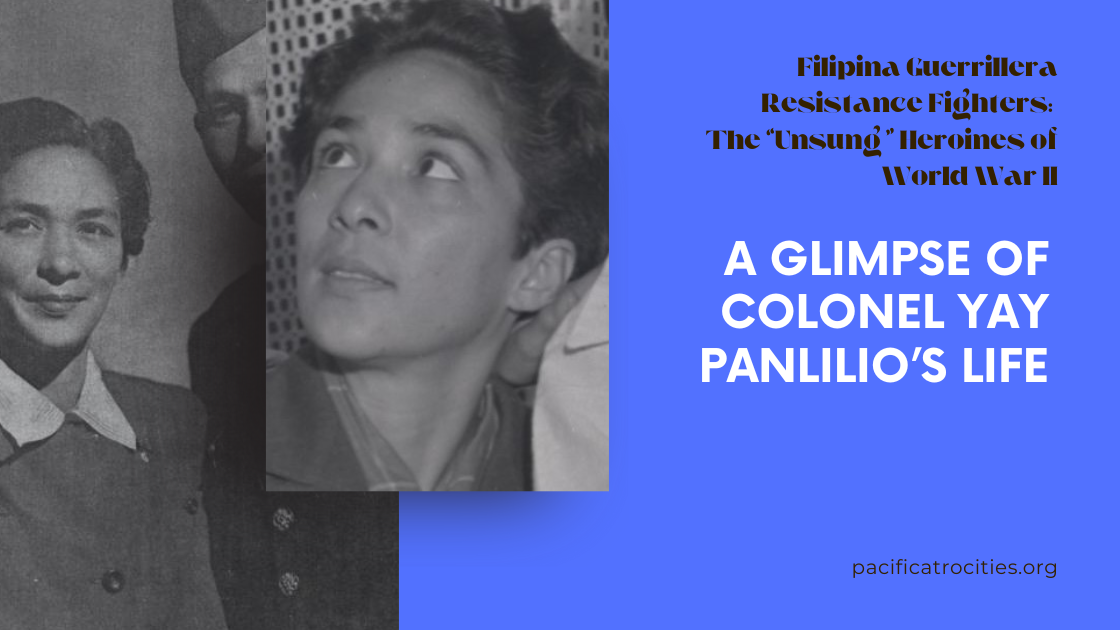
A Glimpse of Colonel Yay Panlilio's Life

12/18/2023

1 Comment

 
by Shen Ramirez, Assistant Researcher and Dr. Stacey Anne Baterina Salinas
Picture
​The Imperial Japanese Army’s (IJA) occupation of the Philippines threatened the lives of ordinary citizens, further limiting their freedoms under a new colonial presence. The guerrilla fighters that resisted Imperial Japan’s occupation came from diverse Philippine communities (ethnolinguistic, class, gender, sexual orientations). Yet, the histories that are promoted and do survive about Philippine resistance to Japanese and American imperialism continue to be limited in scope and representation. After World War II, it was traditionally through a Euro-American lens of the guerrilla resistance such as Wendell Fertig. In the process, this creates a patronizing image of citizens of the Philippines as victims caught between larger geopolitical forces rather than agents of change that fiercely mobilized for their and their country’s independence. 
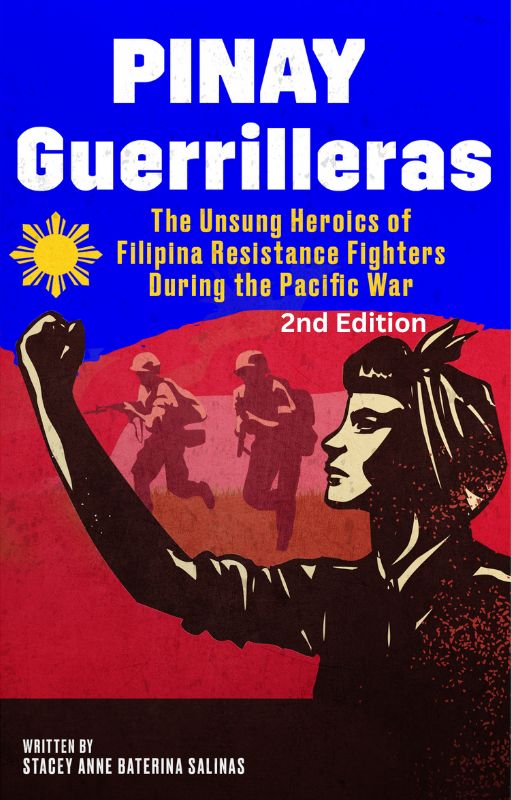
The frame of reference that Euro-American narratives assume is predominantly male-centric (Salinas, Pinay Guerrilleras, 28). The lived realities and histories of people that exist outside these masculine Western narratives are consequently regulated as footnotes, if not completely left out by history, to uphold and reconfirm “cultur­ally entrenched gender conventions” (Salinas, Pinay Guerrilleras, 34). The second edition of Pinay Guerrilleras: The Unsung Heroics of Filipina Resistance Fighters During the Pacific War, written by Dr. Stacey Anne Baterina Salinas, attempts to respond to these historical gaps. Specifically, it highlights the diverse Filipina resistance fighters, guerrilleras, who were vital to forging a pathway towards Philippine sovereignty and liberation and were often the lifeblood of the war efforts in the Philippines. 


Similar to their male counterparts, pinay guerrilleras met all of the incredible odds that stood in their way head-on as the threat of death and torture by the IJA loomed over them. But for women of color in the Pacific, they were vulnerable to other threats; this potentially meant violent sexual and gendered consequences (gendered discrimination, rape, human trafficking, sexual slavery) as individuals who exist within the intersections of gender, sexuality, class, race, and nationality. 

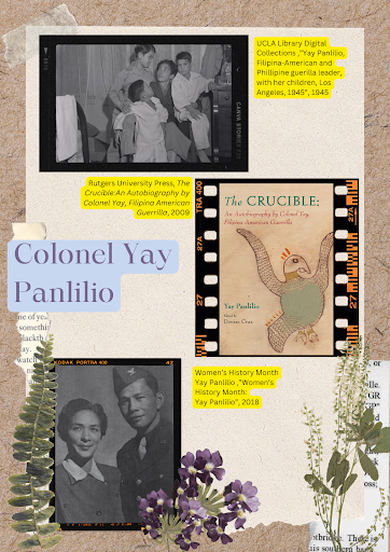
One of the most memorialized Filipina resistance fighters in Philippine history was Colonel Yay Panlilio (‘Yay’ is pronounced Y-I). Born in 1913, Panlilio was a mestiza who was raised by an Irish-American father and a Filipina mother in Denver, Colorado. Always proud of her biracial and multicultural background, Panlilio left the United States as a teenager to pursue a career as a radio news correspondent and journalist in the Philippines. Her professional career proved essential in informing her particular brand of insurgency. She began as a U.S. Intelligence Agent when it became evident that the Japanese would commit a full-blown military occupation of the Philippines. She soon became restless, knowing she could contribute more towards the resistance, and declared herself as a guerrillera. ​
Picture
Panlilio utilized her position as a radio news correspondent at KZRH Manila Radio to “facilitate propaganda against the Japanese…send coded messages hinting at information about nearby Japanese activity to the newly forming resistance movement” (Salinas, Pinay Guerrilleras, 69). Panlilio evaded suspicion from the Japanese in Manila for a while but eventually had to make a hasty escape to the jungle when they attempted to arrest her. It was in the jungle that she met Marcos V. Agustin and his unit of guerrilla resistance fighters, who later became an important part of the Marking Guerrillas itself. 


Panlilio’s autobiography, The Crucible: An Autobiography by Colonel Yay, Filipina American Guerrilla, is considered to be one of the best historical records when trying to understand the lived experiences of Filipina resistance fighters who were in positions of authority (Salinas, Pinay Guerrilleras, 67). However, Panlilio, in her written works, notably downplays her contributions to the movement as “an outspoken journalist, guerrillera spy, and Filipino patriot”; instead, preferring to emphasize the contributions of men, like Marcos V. Agustin or Markings, with whom she had an abusive romantic relationship throughout the war and afterward (Salinas, Pinay Guerrilleras, 67). 


Similar to Yay’s tone that diminished her contributions, other Filipina resistance fighters interviewed for the second edition, including Lourdes Poblete and Serapia Aremas, sometimes humbly described their efforts more as support to male officers of higher rank rather than centering their contributions as pivotal to the overall movement. Rigid gender expectations rooted in Western colonialism and imperialism influenced the ways Filipinas either censored themselves or softened their recollection of their roles, likely out of fear of being perceived as arrogant (suplada) or baga og nawong (having no shame) when revealing their accomplishments.


Panlilio’s autobiography should undoubtedly be seen as an accomplishment in itself, mainly because it provides an important and rare glimpse of what the Filipina insurgency was like in WWII. But, it also provides commentary about the delicate dance that Filipina resistance fighters had to undergo as individuals experiencing sexism on both sides of the front, both on the battlefield against the Japanese and in her unit that doubted her leadership capabilities. Overall, the attempts to preserve Philippine history, especially the guerilla resistance that was essential towards national liberation, continue to be a struggle under the constraints of colonial and imperial forces that have silenced narratives about wartime experiences. Unfortunately, Panlilio’s autobiography is an exception to the rule, but it is evidence of the wealth of information there is for the community when individuals can speak for themselves about their lived experiences during a time of total war. 


To learn more about Filipina wartime heroines, please grab a copy of the second edition of Pinay Guerrilleras: The Unsung Heroics of Filipina Resistance Fighters During the Pacific War. 
Picture
1 Comment
Jack Long
12/19/2023 03:11:41 pm

I have read much on the loss, occupation and liberation of the PI. Col. Panlilio is one of the few women mentioned in the various books and articles I have read over almost 7 decades. your article does a very good job of painting a picture of her service to her nation and to the United States. Unfortunately much of the material written in the PI by the men and women who fought and supported the troops and guerrillas does not migrate to the USA in large numbers.

The Philippines in World War II, 1941-1945 by Bell; Philippine-American Military History, 1902-1942: An Annotated Bibliography by
Meixsel and The Philippines in World War II and to Independence (December 8, 1941-July 4, 1946): An Annotated Bibliography by Netzorg provide good sources. There are a number of others dealing with the PI and WW2 and subjects oustide of WW2.

I served in the PI with the USN 1965-66 and road 2 ships in and out of the PI 1967-68 and have known new many Filipinos in and out of the USN. Fantastic people!

Reply


Leave a Reply.

Pacific Atrocities Education
1639 Polk Street #1070
San Francisco, CA 94109
​415-988-9889
Copyright © 2021 Pacific Atrocities Education.
​We are a registered 501 (c)(3) charity. All donations are tax deductible.​
Donate Now
  • Home
    • Host a Fundraiser for Pacific Atrocities Education
    • About >
      • FAQ's - Frequently Asked Questions
    • Support Us >
      • Projects you can support! >
        • Distributing Books
        • Presenting at 112th Annual Meeting of Pacific Coast Branch
        • Summer Research Relocation Fund
    • Contact
  • Stories
    • Videos >
      • Black Hearts (2021)
    • Blog
    • Podcast: Forgotten History
  • Internship
    • Summer 2026 Internship
    • Summer 2025 Internship
    • Spring 2025 Internship
    • Summer 2024 Internship
    • Summer 2023 Internship
    • Fall 2022 Internship
    • Summer 2022 Internship
    • Summer 2021 Internship
    • Fall 2020- Spring 2021 Internship
    • Summer 2020 Internship
    • Fall 2019 Internship
    • Summer 2019 Internship >
      • Public History Night
    • School Year 2018-2019 Internship
    • Summer 2018 Internship >
      • 2018 Summer Showcase + Fundraiser
    • Fall 2017 Internship
    • Summer 2017 Internship >
      • 2017 Summer Showcase & Fundraiser
  • Books
  • Archives
  • Resource Page
    • Supplementary Research Guides >
      • Unit 731 - Guide >
        • Background of Biochemical Warfare Development
        • Imperial Japan's Chemical Warfare Development Program
        • Map of Unit 731
        • Personnel of Unit 731
        • Duties of Unit 731
        • Human Experimentation
        • [GRAPHIC] Germ Warfare Attacks
        • Cover Ups After the War
        • [OLD] Cover Ups After the War
      • Philippines' Resistance - Guide >
        • Philippines World War II Timeline
        • The Japanese Invasion & Conquest of the Philippines
        • Bataan Death March
        • Formation of Underground Philippines Resistance
        • Supplies of the Guerrilla Fighters
        • The Hukbalahap
        • Hunter's ROTC
        • Marking's Guerrillas
        • United States Army Forces in the Philippines of Northern Luzon (USAFIP-NL)
        • The Aetas
        • Chinese and Filipino-Chinese Nationalist Guerrilla Units
        • The Female Faces of the Philippine Guerrillas
      • Rising Sun Flag - Guide >
        • History of the Rising Sun Flag
        • Atrocities Committed Under the Flag
        • Rising Sun Flag in Pop Culture
      • Pinay Guerrilleras - Guide >
        • Japanese Occupation of the Philippine Islands: Pinays Answering the Call to Arms
        • The Fierce Heneralas and Kumanders of the Hukbalahap Guerrillas
        • Amazons of the Pacific Theater
        • Filipina American Veterans: Recovering the Extraordinary Feats of the Ordinary Pinays
        • The Legacy of the Asian Women Soldier
      • Fall of Singapore - Guide >
        • Singapore World War II Timeline
        • History of World War II in the Pacific
        • History of Singapore
        • Japan's Conquest in Asia
        • Japan's Invasion of the Malay Peninsula
        • Sook Ching Massacre
        • Double Tenth Incident
        • Social Changes and Challenges in Singapore
        • Voices from Syonan
        • Return to British Rule
      • Three Years and Eight Months - Guide >
        • Hong Kong before WW2
        • Buildup to World War 2
        • The Battle of Hong Kong
        • Life during 3 Years and 8 Months
        • East River Column Guerrilla Fighters
        • Prisoners of War Camps
        • End of Japanese Occupation
        • War Crimes Trials
      • Siamese Sovereignty - Guide >
        • The Land of Smiles
        • The Thai-Japanese Relationship
        • Phibun’s Domestic and International Policies
        • The Free Thai Resistance Movement
        • Post WW2 Aftermath of Thailand
      • The Khabarovsk War Crimes Trial - Guide >
        • Defendants of Khabarovsk War Crime
        • The Japanese Empire and USSR in WW2
        • The Employment of the Bacteriological Weapon in the War
        • Planning of Japan invasion to USSR
      • Unit 731 Cover-up : The Operation Paperclip of the East - Guide >
        • Establishing Manchukuo
        • The Development of Unit 731
        • Plan Kantokuen and Bacteriological Warfare
        • The Downfall of the Japanese WW2 Era
        • Three Stages of Interrogations
        • Lasting Impacts
      • Marutas of Unit 731 - Guide >
        • How did Ishii Shiro start unit 731?
        • A Beta Testing Site
        • Establishing Pingfan
        • Experiences at the Human Experimentation Complex
        • Vivisection at the Unit 731
        • Anta Testing Grounds
        • Overall Advance from the Laboratory Creations
        • The End of the War
      • Prince Konoe Memoir - Guide >
        • Who is Prince Konoe?
        • Preparation to Tripartite Pact
        • Emperor Hirohito and Prince Konoe
        • The End of Prince Konoe
      • Competing Empires in Burma - Guide >
        • What was the China-Burma-India Theater?
        • When did the China-Burma-India Theater Happen?
        • Who Fought in the China-Burma-India Theater?
        • The Second Sino Japanese War
        • Japan in the South
        • Operation U-Go
      • Battle of Shanghai - Guide >
        • The Battle of Shanghai. Background
        • Shanghai Before War
        • The First Battle of Shanghai 1932
        • Battle of Shanghai 1937
        • Aftermath of Battle for Shanghai
      • Ishi Shiro - Guide >
        • History of Biological Weapons and The Young Ishii Shiro
        • Establishment in Manchuria
        • Pingfang District - Harbin
        • Failures and Corruption
        • Post War
      • Taiwan The Israel of the East - Guide >
        • Background of Formosa
        • Industrialization of Japan
        • China During WWII
        • Taiwan under Kuomintang
        • New Taiwanese National Identity
      • Seeking Justice for Biological Warfare Victims of Unit 731 - Guide >
        • Introduction of Wang Xuan
        • Colonel Memorandum
        • The Beginning of Biological Warfare
        • The Bacteriological Warfare on China
        • Victims in Zhejiang’s Testimonies
        • After the War
      • Rice and Revolution - Guide >
        • The French Colonial Period
        • Anti-Colonial Resistance
        • The Rise of the Communist Movement
        • Imperial Japan’s Entry into Indochina
        • The Portents of Famine
        • The Famine (1944-45)
        • Legacy of the 1944-45 Vietnam Famine
      • Clash of Empires - Guide >
        • Japan’s Imperialist Origins
        • Japan’s Competition against the West: Nanshin-ron and Hokushin-ron
        • Japanese Imperialism Through the Lens of French Indochina
        • The U.S.-Japan Relations and the Pearl Harbor Attack
      • Hunger for Power and Self-SufficiencyI - Guide >
        • The Influence of War Rations on Post-War Culinary Transformations
        • How World War II Complicated Food Scarcity and Invention
        • American Military Innovations
        • Government-Sponsored Food Inventions in Europe during World War II
        • Feeding the Army: The Adaptation of Japanese Military Cuisine and Its Impact on the Philippines
        • Mixed Dishes: Culinary Innovations Driven by Necessity and Food Scarcity
      • Denial A Quick Look of History of Comfort Women and Present Days’ Complication - Guide >
        • The Comfort Women System and the Fight for Recognition
        • The Role of Activism and International Pressure
        • The Controversy over Japanese History Textbooks
        • The Sonyŏsang Statue and the Symbolism of Public Memorials
        • Activism and Support from Japanese Citizens
        • The Future of Comfort Women Memorials and Education
      • Echoes of Empire: The Power of Japanese Propaganda - Guide >
        • Brief Overview of Imperial Japan
        • Defining Propaganda
        • Propaganda Encouraging Action​
        • The Rise of Nationalism
        • The Formation of Japanese State Propaganda
        • Youth and Education
      • Shadows of the Rising Sun: The Black Dragon Society and the Dawn of Pan-Asianism - Guide >
        • Origins of the Black Dragon Society
        • The Influence of Pan-Asianism
        • Relationship with Sun Yat-sen
        • The Role in Southeast Asia
        • The Spread of Ideology and Espionage
        • Disbandment and Legacy
      • Chongqing Bombing: The Forgotten Blitz of Asia and Its Lasting Impact - Guide >
        • Introduction and Historical Background
        • The Class Divide During the Bombings
        • Resilience and Unity of Chongqing
        • Key Incidents - Great Tunnel Massacre
        • The Aftermath of the Bombings
        • Legacy and Commemoration
      • Shanghai's International Zone: A Nexus of War, Intelligence, and Survival - Guide >
        • Historical Background
        • The International Zone
        • Battles in Shanghai
        • Civilian Intelligence Efforts
        • Wartime Brutality
        • Aftermath & Legacy
    • Lesson Plans >
      • Reparations
      • Ethics in Science
      • Writing the Narrative of a Pinay Fighter
      • Privilege Journal
      • Environmental Injustices
      • Female Guerrillas
      • Hunter's ROTC
      • Scientific Advancements
      • Seeking Justice: A Humanities Lesson Plan
      • The Hukbalahap
      • Trading Immunity
      • Bataan Death March
      • Biochemical Warfare Development
  • Membership
  • Community Movie Day
Contribute